
Blog
The Comprehensive Guide to Bead Breaker Tools for UK Workshops 2026: Balancing Power, Precision, and Profit
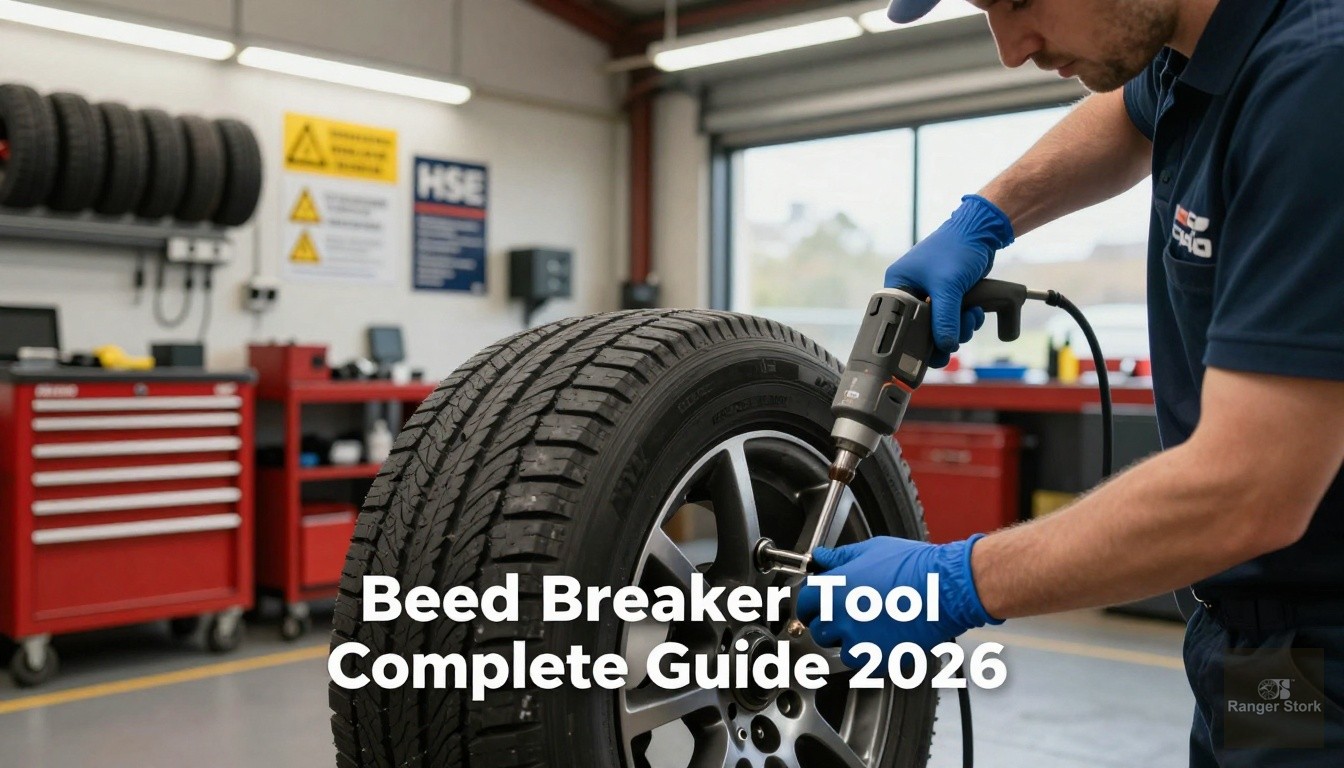
The automotive service industry in the United Kingdom is currently navigating a period of unprecedented technical evolution. As we move through 2026, the operational efficiency of a professional workshop is no longer determined solely by the manual dexterity of its technicians, but by the strategic integration of specialized tooling designed to meet modern engineering challenges. At the heart of this evolution lies the bead breaker—a tool that has transitioned from a simple mechanical lever into a sophisticated instrument of precision.
In the contemporary UK landscape, characterized by the rapid adoption of heavy Electric Vehicles (EVs), the ubiquity of oversized SUVs, and the standardisation of ultra-low-profile alloy wheels, the “standard” approach to tyre service is becoming obsolete. This guide provides an authoritative analysis of the bead breaker market in 2026, offering workshop owners and fleet managers a blueprint for navigating manual versus pneumatic systems, the rigours of Run-flat (RFT) and Extra Load (XL) requirements, and the stringent demands of HSE compliance and B2B financial viability.
1. The Great Divide: Manual vs. Pneumatic Bead Breakers in the 2026 Landscape
The choice between manual and pneumatic bead breakers is no longer merely a budgetary consideration; it is a fundamental decision that defines a workshop’s service capacity and its ability to handle modern vehicle architectures. In 2026, the influx of heavy EVs and high-performance luxury vehicles has recalibrated the physical demands of the garage floor.
The Role of Manual Bead Breakers: Niche Utility and Portability
Manual bead breakers remain a testament to durable, cost-effective engineering. Relying on the technician’s physical strength augmented by mechanical leverage, these tools are the primary choice for specific, low-volume, or off-site applications.
Strategic Applications for Manual Breakers:
* Mobile Tyre Fitting: Where van space is at a premium and high-CFM (Cubic Feet per Minute) air supply is limited.
* Classic Car Restoration: Where vintage rims require a “tactile feel” that high-pressure pneumatic systems may lack.
* Agricultural and Off-Road Recovery: For field repairs where portability is the overriding priority.
However, for a high-volume UK workshop, the manual approach introduces significant systemic risks, including increased “dwell time” per vehicle and a higher probability of technician fatigue.
The Rise of Pneumatic Power: Throughput and Consistency
Pneumatic bead breakers utilize regulated compressed air to deliver consistent, high-pressure force. This allows the tool to unseat even the most stubborn beads in seconds without physical strain. In the 2026 market, the transition to pneumatic power is driven by two critical factors: Technician Retention and Operational Velocity.
If a technician is required to spend ten minutes struggling with a reinforced XL tyre using a manual tool, the workshop is not merely losing time; it is eroding its profit margin and increasing the risk of Musculoskeletal Disorders (MSDs). Pneumatic tools provide the repeatability required to maintain a profitable, high-cadence service schedule.
2. The Middle Ground: Portable Pneumatic Bead Breakers
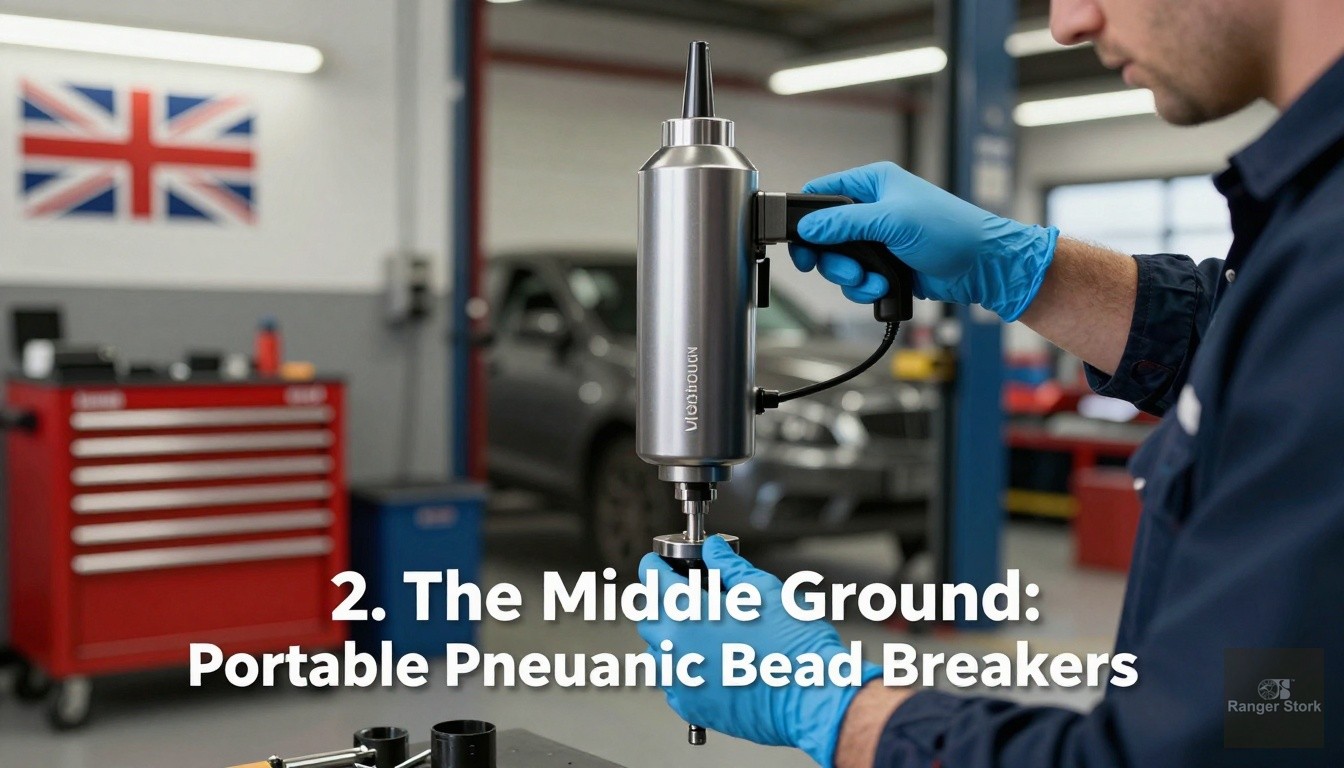
A significant trend for 2026 is the emergence of the “Portable Pneumatic” category. These tools bridge the gap between basic manual levers and the massive, static tyre-changing machines that can cost upwards of £3,000.
The “Split-Task” Workflow Efficiency
Portable pneumatic units are handheld but powered by the workshop’s existing air lines. They offer the raw unseating power of a full-scale machine without the massive footprint. For a growing UK workshop, these tools are essential for implementing a “split-task” workflow.
By using a portable bead breaker to unseat tyres on the floor or a dedicated workstand, the primary tyre changer is freed up exclusively for the mounting and balancing phases. This parallel processing can increase a single service bay’s efficiency by an estimated 35-45%.
Key Benefits of the Portable Pneumatic Category:
* Reduced Capital Expenditure: Typically priced between £300 and £480, these units offer high ROI for garages not yet ready for a second full-scale station.
* Versatility: They are capable of handling the stiffest beads on RFT and XL tyres that would often defeat manual tools.
* Ergonomics: Designed to reduce the “lifting and twisting” motions that lead to workplace injuries.
3. Navigating the Rigidity: Run-flat (RFT) and Extra Load (XL) Requirements
As we analyse the technical specifications of modern rubber, the challenges posed by Run-flat (RFT) and Extra Load (XL) tyres are the primary drivers of equipment upgrades in 2026.
The Physics of Run-flat Tyres (RFT)
Run-flat tyres are engineered with reinforced sidewalls (often containing thick rubber inserts) designed to support the vehicle’s weight at zero pressure. This inherent rigidity makes the bead—the critical seal where the tyre meets the rim—notoriously resistant to unseating.
Technical analysis reveals a “memory effect” in RFTs, where the reinforced rubber attempts to spring back into the bead seat during the breaking process. Traditional manual breakers often lack the concentrated “pinch” required to force these sidewalls into the rim’s drop-centre. Modern 2025-spec bead breakers often feature multi-point pressure systems or “hold-down” functions that keep the bead unseated while the technician prepares the next step, preventing frustrating re-seating.
The EV Revolution and Extra Load (XL) Tyres
By 2026, the UK has seen a massive shift toward Electric Vehicles. Because EVs are significantly heavier than internal combustion engine (ICE) vehicles—often exceeding 2.5 tonnes—they require Extra Load (XL) tyres as a baseline.
These tyres feature higher internal pressure ratings and reinforced carcasses. Attempting to service an EV’s XL tyres with an underpowered or outdated manual bead breaker is a recipe for disaster. The force required is substantially higher than what was common a decade ago. If a technician applies excessive, unguided force with an inadequate tool, they risk tearing the bead wire or damaging the internal butyl liner, which can lead to catastrophic tyre failure at motorway speeds.
4. The Art of Protection: Safeguarding Low-Profile and Alloy Wheels
In the UK automotive market, the aesthetic value of a vehicle is often tied to its wheels. Diamond-cut alloys and ultra-low-profile tyres (35-series or lower) leave zero margin for error. A single slip of a steel bead-breaking shovel can result in a permanent gouge that costs £100-£150 to refurbish.
Implementing a “Zero-Damage” Workflow
Modern pneumatic breakers in 2026 have integrated features to mitigate this risk. Workshops must prioritize tools that offer:
- Non-Marring Contact Points: The transition from steel-on-steel to composite contact is non-negotiable. High-density nylon or replaceable polymer pads on the shovel face have reduced cosmetic damage claims in UK garages by an estimated 60%.
- Adjustable Stroke Limiters: These prevent the shovel from travelling too far toward the centre of the wheel, protecting the internal barrel of the alloy.
- Precision Geometry: Modern shovels are shaped to follow the specific contour of the rim edge, ensuring force is applied to the tyre bead rather than the alloy flange.
With customer expectations at an all-time high, the financial logic is clear: the cost of protective safety attachments is a fraction of the cost of a single insurance claim or a lost customer.
5. Governance and Grace: HSE Safety and Regulatory Compliance
The Health and Safety Executive (HSE) in the UK maintains a rigorous focus on workshop operations, specifically regarding Manual Handling and the management of Pressure Systems.
Manual Handling Operations Regulations (MHOR)
Under MHOR, UK employers are legally required to minimize the risk of injury to staff. Repetitive use of manual bead breakers on modern, stiff-sidewall tyres is increasingly classified as a high-risk activity for musculoskeletal disorders. HSE reports indicate that MSDs account for roughly 40% of all work-related ill-health in the UK.
Transitioning to pneumatic-assisted tools is viewed by safety inspectors as a “reasonable adjustment” to protect workers. Workshops that have modernised their equipment report not only higher safety compliance but also improved staff retention and reduced absenteeism.
Pressure Systems Safety Regulations 2000 (PSSR)
The use of pneumatic bead breakers brings the workshop under the purview of PSSR. To remain compliant in 2026, workshops must ensure:
* Written Schemes of Examination: Regular inspection of air lines, regulators, and the tool’s internal pneumatic cylinders.
* Competency Training: Technicians must be trained in the specific geometry of modern rims. A tool slipping under 10 bar of pressure can cause severe impact injuries or a “tyre blast” if the bead is damaged.
Safety in 2026 is a dual-layered approach: utilizing tools that reduce physical strain while maintaining a rigorous inspection regime to manage the risks inherent in high-pressure systems.
6. The Economics of Excellence: B2B Pricing and Return on Investment (ROI)
For a UK workshop, the purchase of a bead breaker is a strategic B2B investment. In the £50 to £500 price bracket, the value proposition changes significantly as one moves up the scale.
The £50 to £150 Tier: Quality Manual Tools
In this range, you will find high-quality manual breakers.
* What to look for: Heavy-duty box-section steel, long leverage handles, and adjustable bases for different wheel diameters.
* UK Specifics: Ensure the tool has a high-quality powder-coated finish. In the UK, tyres are frequently coated in corrosive road salt during winter; a cheap paint job will lead to rust and mechanical seizure within a single season.
The £150 to £500 Tier: The Professional “Sweet Spot”
This range covers high-end manual systems and professional-grade portable pneumatic tools.
* Key Features: Look for “quick-release” air valves, stroke-limiters for rim protection, and a weight under 15kg for ergonomic handling.
* B2B Value: Investing closer to the £500 mark typically secures a tool with superior seal quality and a comprehensive UK-based warranty—vital for minimizing downtime.
Calculating the ROI: The Efficiency Multiplier
The Return on Investment can be calculated with striking clarity for a typical UK garage:
* Manual Method: 3 to 6 minutes of significant physical exertion per tyre (considering setup and the struggle with stiff beads).
* Pneumatic Method: Under 45 seconds per tyre.
* The Math: Saving 4 minutes per tyre across 20 tyres a day equates to 80 minutes of reclaimed labour time daily. At a UK average shop rate of £70 per hour, a £450 pneumatic tool pays for itself in approximately 10 to 12 working days.
7. Future-Proofing the Workshop: A Vision for 2026 and Beyond
As we conclude this guide, it is evident that the bead breaker has become a central pillar of the modern workshop ecosystem. The shift toward heavier vehicles, complex tyre structures, and the absolute requirement for wheel protection has redefined the “minimum viable tool” for the UK market.
Workshops that continue to rely on antiquated methods risk being marginalized by the sheer physical and economic demands of the modern tyre market. The ability to adapt is the ultimate competitive advantage. By understanding the nuances of pneumatic power, the specific requirements of EV-ready XL tyres, and the imperative of HSE compliance, workshop owners can build a foundation of long-term profitability.
Actionable Takeaways for Workshop Owners:
- Audit Your Service Mix: If more than 25% of your throughput involves SUVs, EVs, or vehicles with 19-inch+ alloys, a manual breaker is no longer commercially viable as a primary tool.
- Invest in “Alloy-Safe” Technology: Retrofit existing tools with polymer guards or upgrade to 2026-spec shovels to eliminate the risk of costly rim damage claims.
- Prioritize Ergonomics: Use pneumatic tools to reduce the physical burden on technicians, thereby lowering the risk of MSDs and improving workplace morale.
- Enforce a Maintenance Schedule: Ensure all pneumatic tools are part of a PSSR-compliant inspection routine to prevent equipment failure and ensure staff safety.
The journey of the tyre from the road to the workshop and back again is a technical symphony. The bead breaker is the opening movement of that performance. By choosing tools that prioritize technician health, rim integrity, and operational speed, the modern UK workshop ensures its place in a future where precision and performance are the only currencies that matter.