
Blog
HGV Torque Wrench Complete Guide 2026: Navigating UK Commercial Workshop Compliance, Safety, and Technology
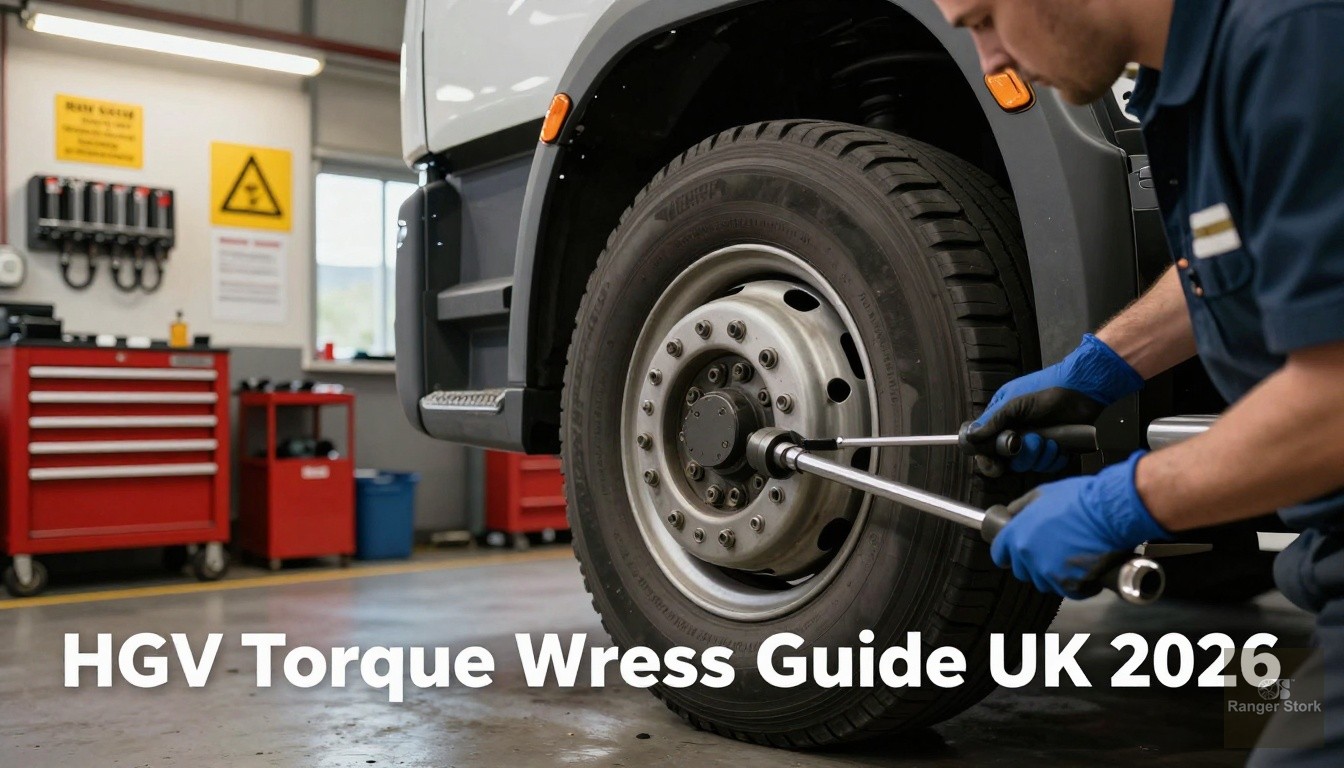
As we move into 2026, the landscape of heavy goods vehicle (HGV) maintenance in the United Kingdom is undergoing a seismic shift. No longer is the workshop merely a place of grease and gears; it has become a frontline in the battle for road safety and regulatory compliance. The Driver and Vehicle Standards Agency (DVSA) has significantly ramped up its scrutiny of fleet operators, placing wheel security at the very top of its enforcement agenda. This shift is driven by a sobering reality: wheel loss incidents remain a persistent threat on UK motorways. According to historical data from the Transport Research Laboratory (TRL) and the DVSA, there are an estimated 150 to 400 “wheel loss” incidents on UK roads annually. While the raw number might seem manageable, the physical impact of a single detached wheel—weighing upwards of 100kg and travelling at 56mph—is almost always catastrophic, carrying the kinetic energy of a small explosive device.
For the modern workshop manager, 2026 marks the transition from manual, intuition-based maintenance to a data-driven, “smart” asset management model. The torque wrench, once a simple mechanical tool kept in the bottom of a chest, is now a sophisticated instrument of legal protection. The economic stakes have never been higher. A single wheel-off incident can result in fines exceeding £20,000 for the operator, alongside devastating reputational damage. In the most tragic circumstances involving fatalities, charges of Corporate Manslaughter are no longer theoretical; they are a clear and present legal danger. Furthermore, the “S-marked” prohibitions issued by the DVSA act as a black mark against an operator’s Compliance Risk Score (OCRS), leading to more frequent roadside stops and potential appearances before the Traffic Commissioner.
The purpose of this guide is to bridge the gap between the mechanical necessity of tightening a nut and the complex regulatory framework of the O-licence. We are entering an era where “tight enough” is a liability. By understanding the evolution of torque technology and the tightening grip of the law, workshops can transform their wheel security policies from a point of weakness into a pillar of operational excellence.
Technical Specifications: Mastering the 450Nm to 700Nm Threshold
To master HGV wheel security, one must first master the physics of “clamping force.” It is a common misconception that torque is simply about how hard a nut is turned. In reality, torque is a proxy for tension. When a technician applies torque to an M22 x 1.5 HGV wheel stud, they are effectively stretching that stud within its elastic limit. This stretch turns the stud into a very stiff, high-capacity spring. It is this spring-like tension that provides the clamping force necessary to hold the wheel assembly against the hub. For the majority of UK HGVs, particularly those using 10-stud ISO wheels, the required torque falls within the 450Nm to 700Nm range, with 600Nm being the standard benchmark for the industry.
The Physics of 600Nm Clamping Force
Applying 600Nm of torque to a standard M22 x 1.5 HGV wheel stud creates approximately 200kN (20 tonnes) of clamping force per stud. On a 10-stud wheel, this equates to 200 tonnes of force holding the wheel to the hub. Research shows that a mere 10% reduction in torque—dropping from 600Nm to 540Nm—can reduce the fatigue life of the stud by up to 50% due to increased “micro-movement” between the wheel and the hub. This highlights why the precision of a calibrated wrench is non-negotiable.
Expert Insight: Why is the 450Nm to 700Nm range so critical for HGVs, and can I use a standard passenger car torque wrench?
The 450Nm to 700Nm range is dictated by the massive clamping force required to hold a commercial vehicle wheel—often carrying loads of several tonnes—securely against the hub. Standard passenger car torque wrenches typically max out at 200Nm to 300Nm. Attempting to use a lower-rated tool or a simple “breaker bar” without measurement leads to catastrophic failure. At 600Nm, the bolt is stretched within its elastic limit to act like a heavy-duty spring. If you under-torque, the nut will eventually back off due to operational vibrations. If you over-torque using an uncalibrated bar, you risk exceeding the yield point of the steel stud, leading to sudden snapping. In the UK, the DVSA identifies wheel loss as a “Top 5” safety priority, making this specific torque range the legal and mechanical benchmark for HGV safety.
The Consequences of Deviation: Under-Torque vs. Over-Torque
The consequences of deviating from the manufacturer-specified range are severe.
* Under-torquing: This leads to “micro-movement” between the wheel and the hub. Once micro-movement begins, the holes in the wheel rim become elongated (ovalised), the studs are subjected to shear forces they weren’t designed to handle, and the nuts eventually back off completely.
* Over-torquing: This is equally hazardous. If a technician uses an uncalibrated breaker bar or an overpowered impact wrench, they may exceed the “yield point” of the steel stud. Once the steel has yielded, it loses its elastic properties; it has been permanently stretched and can no longer provide the necessary clamping force. This often leads to the stud snapping suddenly under load, often miles after the maintenance was performed.
Thread Condition, Friction, and Lubrication
Friction is the enemy of accuracy. If threads are bone-dry and rusted, much of the torque applied is wasted overcoming friction rather than stretching the stud. Conversely, over-lubricating threads can lead to massive over-tensioning at the same torque value because the friction is too low. Workshops must follow manufacturer-specific guidelines—usually a light drop of oil on the first few threads only, or the use of specific anti-seize compounds—to ensure the 450-700Nm threshold results in the correct clamping force.
The Tool Arsenal: Comparing Click-Type, Beam, and Electronic Digital Wrenches
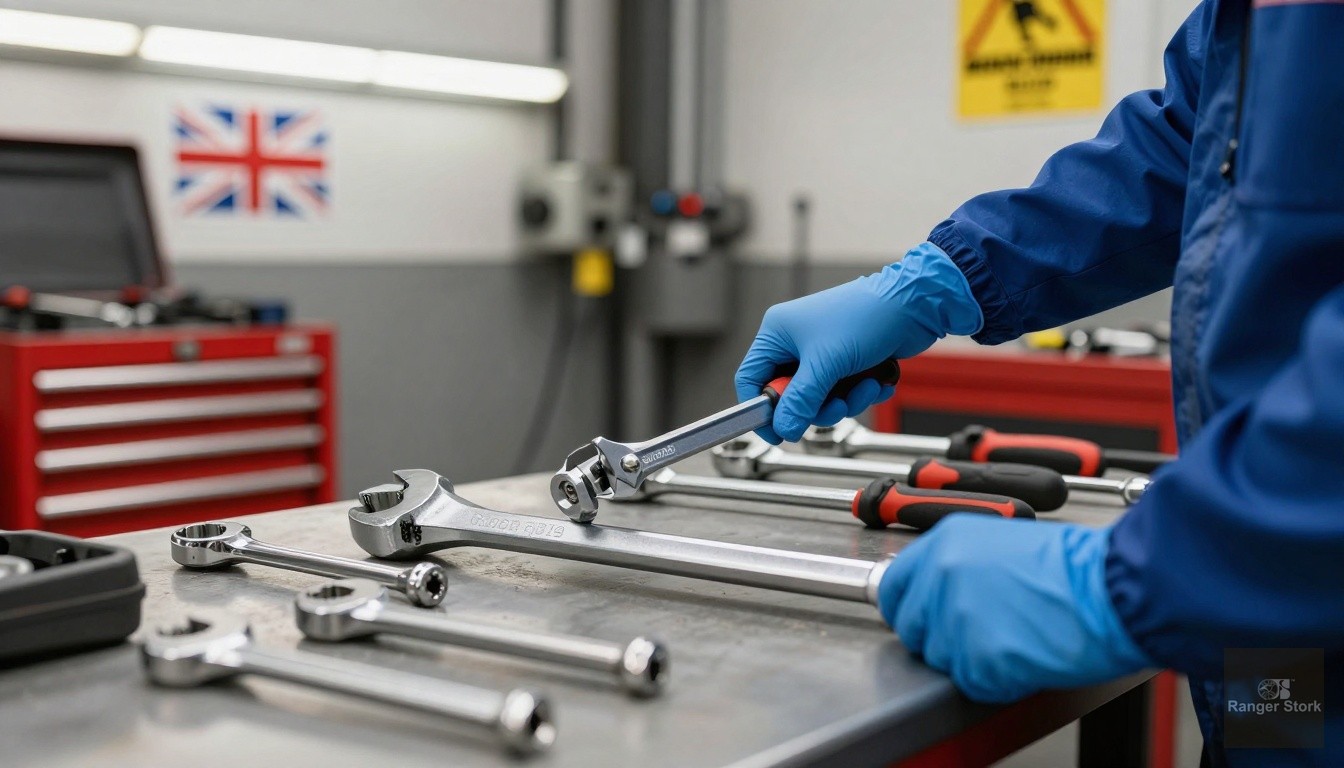
Selecting the right tool for a UK commercial workshop involves balancing speed, accuracy, and the need for an audit trail. The market in 2026 is divided into three primary categories, each with its own niche in the maintenance ecosystem.
1. Click-Type Torque Wrenches
These remain the workhorses of the UK industry. Ranging from £150 to £300 for professional-grade models, they are favoured for their simplicity and tactile feedback. When the preset torque is reached, a mechanism inside the handle “clicks” and slips slightly, signalling the technician to stop.
* Pros: Robust, cost-effective, no batteries required.
* Cons: Prone to “over-clicking”—where a technician continues to pull after the click, adding an extra 50-100Nm of unwanted torque. Furthermore, if stored without being wound back to their lowest setting, the internal spring can lose its calibration quickly.
2. Beam-Type Torque Wrenches
Often considered “old school,” beam-type wrenches have seen a resurgence in specialist environments. They rely on the physical deflection of a steel beam to indicate torque on a scale.
* Pros: They have no internal springs to fatigue, making them incredibly reliable over long periods. In high-precision environments where visual confirmation of torque “dwell” is required, they are invaluable.
* Cons: They can be difficult to read in the cramped, dimly lit wheel arches of a multi-axle trailer, and they lack the tactile “stop” signal of a click-type wrench.
3. Electronic Digital Torque Wrenches
This is the fastest-growing sector for 2026, with prices ranging from £400 to £800+. These tools replace the mechanical click with digital sensors and strain gauges.
* Pros: They offer visual (LCD), auditory (beeps), and haptic (vibration) alerts as the target torque is approached. The most advanced models also measure the “angle of turn,” a secondary check that ensures the nut has actually moved and settled correctly.
* Cons: Higher initial cost, requires battery management, and can be more sensitive to rough handling.
Expert Insight: How do electronic digital torque wrenches improve DVSA O-licence compliance compared to traditional click-types?
Digital torque wrenches are a game-changer for O-licence compliance because they eliminate the “human factor” in record-keeping. While a click-type wrench tells the technician they have reached the limit, it doesn’t record the event. Modern digital wrenches (in the £500-£800 range) often feature Bluetooth or USB connectivity that logs every single bolt tightened, the exact torque achieved, and the date/time stamp. When a DVSA auditor or Traffic Commissioner asks for proof of maintenance, a digital log provides an indisputable audit trail. This level of traceability proves that the workshop is following its “Guide to Maintaining Roadworthiness” protocols to the letter, significantly reducing the risk of being called to a Public Inquiry following a roadside inspection failure.
Workshop Suitability Matrix
| Feature | Click-Type | Beam-Type | Electronic Digital |
|---|---|---|---|
| Price Point | £150 – £300 | £200 – £400 | £400 – £800+ |
| Ease of Use | High (Tactile) | Medium (Visual) | High (Multi-sensory) |
| Data Logging | None | None | Bluetooth/USB |
| Durability | High | Very High | Medium/High |
| Best For | Routine Maintenance | Specialist Repairs | High-Volume/Compliance Heavy |
Compliance and the Law: DVSA O-Licence and “The Guide to Maintaining Roadworthiness”
In the eyes of the law, a torque wrench is not just a tool; it is a “controlled document.” This is a concept that many workshop managers struggle with until they face a DVSA audit. The DVSA’s “Guide to Maintaining Roadworthiness” is the definitive text for UK fleet operations. It explicitly states: “Evidence of the calibration of torque wrenches should be maintained and available for inspection.” This means that if you cannot prove when a wrench was last calibrated, or if you cannot prove that a specific vehicle’s wheels were torqued to the manufacturer’s specification, you are effectively in breach of your O-licence conditions.
The Wheel Security Policy: A Three-Stage Approach
The Traffic Commissioner looks for a robust “Wheel Security Policy.” This policy must include three critical stages:
1. Initial Tightening: Using a calibrated tool to the correct specification.
2. Recording: Logged on the job card (Vehicle registration, wheel position, torque applied, tool ID).
3. Mandatory Re-torque: A check performed after a short journey.
The re-torque is the area where most compliance failures occur. When a wheel is first fitted, microscopic imperfections on the mating surfaces—the hub, the wheel rim, and the nuts—can “settle” or “bed in” as the vehicle begins its journey and the components undergo thermal expansion and contraction.
Expert Insight: Is a “re-torque” after 40km-80km really necessary, or is it just a recommendation?
In the UK commercial vehicle sector, the re-torque is a mandatory safety requirement, not a suggestion. When a wheel is first fitted, microscopic imperfections on the mating surfaces can “settle” as the vehicle moves. This settling can lead to a slight reduction in the initial clamping force. By checking the torque after 40km to 80km (roughly 25 to 50 miles), the technician ensures that the nuts have remained at the specified 450-700Nm. Failure to perform and document this re-torque is a common reason for DVSA “S-marked” prohibitions, which indicate a significant failure in maintenance systems and can directly threaten a company’s O-licence.
HSE Safety Requirements: Protecting the Modern Technician
Applying high torque is a physically demanding task that carries significant Health and Safety Executive (HSE) implications. The physical reality of applying 600Nm or 700Nm of force is often underestimated. To put it in perspective, to achieve 600Nm of torque with a standard 1-metre long wrench, a technician must apply approximately 61kg of force. The HSE’s manual handling assessment chart (MAC) tool identifies any manual pull/push force exceeding 20kg-25kg as “high risk.”
Expert Insight: What are the specific HSE risks associated with manual high-torque applications in a workshop?
The primary HSE risk is Musculoskeletal Disorder (MSD) caused by the extreme physical exertion required to pull a wrench to 700Nm. Without proper technique or long-leverage tools, technicians often use their body weight in unsafe positions, leading to chronic back injuries or acute “rebound” injuries if the socket slips. HSE guidelines emphasize the “Hierarchy of Control,” suggesting that workshops should consider mechanical aids, such as torque multipliers or pneumatic torque tools, if high-volume manual torqueing is required. Furthermore, there is a risk of “stored energy” release; if a cheap, non-industrial grade wrench fails under 600Nm of pressure, the sudden release can cause the technician to fall or strike nearby equipment. Professional-grade tools (£400+) are engineered to fail safely and provide better ergonomics to mitigate these risks.
Mitigating Risk in the Bay
To mitigate these risks, workshops should prioritize:
* Longer Leverage: Tools with handles of 1.5 metres or more reduce the physical force required from the operator.
* Torque Multipliers: These allow a technician to apply a small amount of input torque (e.g., 100Nm) which is then geared up to the required 600Nm output. This keeps the physical load on the operator within the “safe” 20kg zone.
* Correct Stance: Technicians should always pull the wrench toward themselves rather than pushing it away, and they should never use their body weight to “bounce” on the wrench.
The Gold Standard of Maintenance: Calibration Certification and ISO 6789

In the world of HGV maintenance, accuracy is not a matter of opinion; it is a matter of international standards. The ISO 6789:2017 standard is the benchmark for torque tool calibration in the UK. This standard was significantly updated to split the requirements into two distinct parts: Part 1 for the manufacturing and design of the tool, and Part 2 for the calibration process itself.
Understanding ISO 6789:2017
Expert Insight: How does the ISO 6789:2017 update change how workshops manage their tools?
The ISO 6789:2017 standard split the requirements into two parts: Part 1 for manufacturing and Part 2 for calibration. For a workshop manager, this means that calibration is now more rigorous. It requires the calibration lab to calculate “uncertainty” in the measurements—accounting for factors like temperature and human variation. In practical terms, it means you cannot simply assume a wrench is “close enough.” If your tool is used for safety-critical HGV wheel nuts, the 2017 standard ensures that the 450-700Nm applied is accurate within a very narrow margin. Workshops must now ensure their external calibration providers are working to this specific standard to remain compliant with modern UK safety audits.
Calibration Frequency and Documentation
The recommended frequency for calibration is typically every 12 months or every 5,000 “cycles,” whichever comes first. However, in a high-intensity 24/7 workshop environment, many UK operators are moving toward a 6-month cycle.
It is vital to distinguish between a “Certificate of Conformity” and a “UKAS Calibration Certificate.”
* Certificate of Conformity: A statement from the manufacturer that the tool left the factory within tolerance.
* UKAS Calibration Certificate: A legally recognised document from a laboratory accredited by the United Kingdom Accreditation Service. This proves the tool has been tested against national standards and provides the “traceability” required by the DVSA.
Strategic Procurement: B2B Pricing, Lifetime Cost, and ROI
When it comes to purchasing torque wrenches for a commercial environment, the “sticker price” is often the least important figure. Workshop managers must look at the “Total Cost of Ownership” (TCO).
B2B Pricing Tiers for 2026
- Budget/Entry-level (£80-£150): These are often unbranded tools. While they may work initially, they are frequently “disposable.” If the internal spring fails or the ratchet head wears out, there are no spare parts available. These tools often lose calibration within 500-1,000 cycles, making them a false economy for professional fleets.
- Professional/Standard (£200-£450): This is the sweet spot for many fleets. Brands like Norbar, Britool, or Teng Tools offer robust, mechanical click-type wrenches that are fully serviceable. Every component can be replaced, extending the life of the tool to a decade or more.
- Premium/Digital (£500-£800): These represent the pinnacle of 2026 technology. While the initial investment is high, the ROI comes from the reduction in administrative labour and the near-elimination of human error via automatic data logging and Bluetooth integration.
Expert Insight: What should I look for in a B2B warranty and calibration service when spending £500+ on a torque wrench?
When investing in premium B2B tools, the warranty should cover not just manufacturing defects but also provide a clear path for rapid repair. Look for brands that offer a UK-based, UKAS-accredited calibration service. A standard “Certificate of Conformity” from an overseas factory is often insufficient for UK legal scrutiny. You want a supplier that guarantees a 48-hour turnaround for annual calibrations to minimise workshop downtime. Additionally, check if the tool is “serviceable”—professional £500 digital wrenches should be fully rebuildable, offering a much lower TCO over a five-year period compared to disposable budget options.
Bulk-Buy and Standardisation
For multi-site workshops, standardising on a single brand of torque wrench simplifies the calibration schedule and ensures that all technicians are trained on the same equipment. It is also advisable to purchase through established UK industrial suppliers to ensure the “paper trail” is valid from day one.
Common Pitfalls: Why Wheel Nuts Still Fail
Even with a £800 digital wrench, failures can occur if the wider system is flawed. Common pitfalls include:
* Painting Hub Mating Surfaces: Thick paint on the hub or wheel face can “crush” over time, leading to a loss of clamping force even if the nut remains tight.
* Impact Wrench Abuse: Using an impact wrench to “hammer” the nuts home before using a torque wrench often results in the nuts already being over-torqued beyond the 700Nm limit. The torque wrench then simply “clicks” without moving the nut, giving a false sense of security.
* Ignoring the Studs: Studs have a finite life. In 2026, best practice involves using a stud stretch gauge or replacing studs after a set number of wheel changes to prevent fatigue failure.
Conclusion: Future-Proofing Your Workshop for 2026 and Beyond
The humble torque wrench is the linchpin of HGV safety and legal compliance in the UK. The transition to 2026 demands a higher level of professionalism and technical accuracy than ever before. The days of tightening wheel nuts by “feel” are long gone, replaced by a rigorous framework of 450Nm to 700Nm specifications, ISO 6789:2017 calibration standards, and the digital logging of maintenance events.
Workshop managers must view their torque wrenches not as mere overheads, but as critical investments in the company’s future and its O-licence integrity. The right tool, used with the right technique, backed by a valid UKAS calibration certificate, is the only way to ensure that a fleet remains roadworthy and that the business remains protected from the devastating consequences of wheel loss. Whether you choose the reliable click-type wrench or the cutting-edge digital models, the goal remains the same: 200 tonnes of clamping force, every nut, every time.
Now is the time to act. We encourage all workshop managers to audit their tool chests immediately. Review your current torque policies, check the expiration dates on your calibration certificates, and consider whether your current equipment is capable of meeting the data-driven demands of a 2026 DVSA inspection. By future-proofing your workshop today, you are securing the safety of the UK’s roads and the longevity of your commercial operations for years to come.