
Blog
The 2026 Professional Tyre Inflator Guide: Navigating Precision, Compliance, and Profitability in UK Workshops
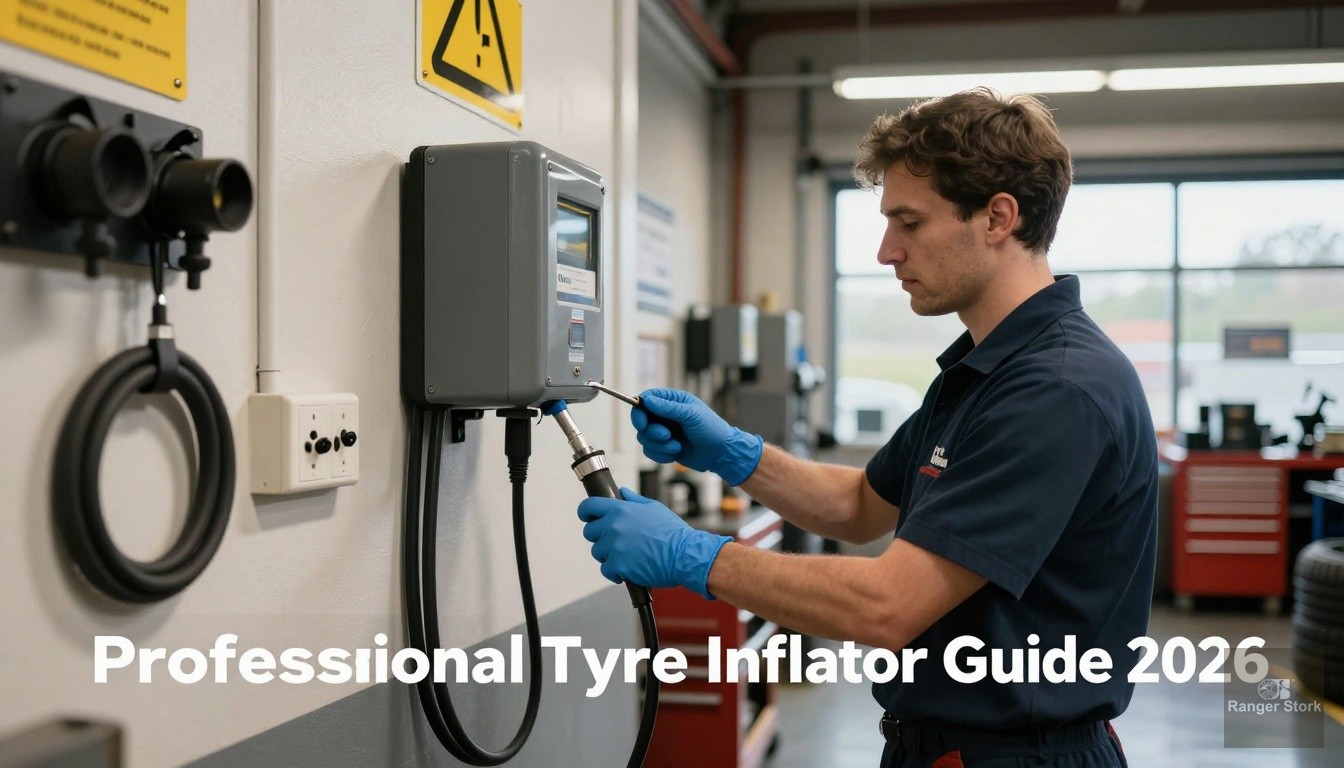
In the modern automotive landscape, the UK workshop has evolved beyond a mere site for mechanical repair; it has become a high-tech laboratory where precision is the primary currency. As we progress through 2026, the humble act of tyre inflation has transitioned from a secondary maintenance task to a critical safety, performance, and compliance procedure. This shift is driven by the rapid ascendancy of Electric Vehicles (EVs), the intricate complexity of Advanced Driver Assistance Systems (ADAS), and increasingly stringent UK safety regulations.
To understand the modern landscape of tyre inflation is to understand the heartbeat of the workshop itself. This guide serves as a definitive resource, designed to illuminate the path for workshop owners, fleet managers, and technicians across the United Kingdom. It ensures that every vehicle leaving the service bay does so in a state of perfect technical harmony, meeting the rigorous demands of 21st-century motoring.
1. The Digital Ascendance: Why Digital Gauges Define the 2026 Workshop
The transition from analog to digital is not merely a change in display technology; it represents a fundamental shift in the philosophy of measurement. In 2026, the margin for error in tyre pressure has narrowed to a point where traditional mechanical gauges are becoming obsolete in professional environments.
The Precision Gap: Digital vs. Analog
Digital gauges offer a level of precision—often to within +/- 0.1 PSI—that analog counterparts cannot consistently match. Analog gauges are inherently susceptible to “mechanical fatigue,” where internal Bourdon tubes or springs lose elasticity over time. Furthermore, they are plagued by parallax error, where the recorded pressure varies depending on the technician’s viewing angle.
In a high-volume UK workshop, these minor discrepancies are cumulative. A 2-PSI variance across an axle might seem negligible on a 15-year-old hatchback, but on a modern vehicle, it can interfere with electronic stability control (ESC) parameters and torque vectoring systems.
Why Digital Integration is Essential
The prevalence of EVs and ADAS requires absolute accuracy. Modern digital units in 2026 come equipped with “Auto-Stop” technology and ceramic pressure sensors. These features ensure that every tyre is inflated to the exact manufacturer specification without the technician needing to manually pulse a trigger.
For the professional UK workshop, this consistency is vital for vehicle handling. Heavy EVs, such as the BMW iX or the Jaguar I-PACE, place immense stress on tyre sidewalls. Even a minor pressure variance can lead to accelerated, uneven tyre wear and a measurable decrease in battery range—a primary concern for the modern consumer.
The Technical Reality of Accuracy: BS EN 12645:2014
The British Standard BS EN 12645:2014 remains the gold standard for all tyre pressure measuring instruments in the UK. This regulation specifies:
* 0 to 4 BAR: A Maximum Permissible Error (MPE) of +/- 0.08 BAR.
* Above 4 BAR: A Maximum Permissible Error (MPE) of +/- 0.16 BAR.
Digital gauges, utilizing solid-state pressure transducers, typically maintain this level of accuracy for 18–24 months, whereas analog gauges often drift outside these legal limits within six months of heavy workshop use. While annual certification is a legal mandate, the inherent stability of digital technology provides a crucial safety net for the business.
2. The Arteries of the Workshop: Airline Systems and the Quest for Clean Air
Beyond the handheld tool lies the complex network of the workshop airline system. This system is the lifeblood of the service bay, yet its impact on modern vehicle components is frequently the most overlooked aspect of workshop management.
The “Clean Air Mandate” and ISO 8573-1
A fixed workshop airline system, if not rigorously maintained, becomes a reservoir for moisture and oil aerosol contamination. This is catastrophic for modern Tyre Pressure Monitoring Systems (TPMS).
How do workshop airline systems impact the longevity of modern TPMS sensors?
When “wet” or contaminated air is pumped into a tyre, it initiates corrosion on the delicate internal electronics of the TPMS sensor. This leads to premature failure, manifesting as a “TPMS Warning” light on the customer’s dashboard shortly after service—a classic “comeback” that erodes profit and reputation.
A professional 2026 workshop setup must adhere to ISO 8573-1:2010 air quality standards. This requires:
1. Refrigerant Dryers: To remove water vapour before it enters the ring main.
2. Coalescing Filters: To eliminate oil mists and fine particulates.
3. Auto-Drains: To ensure liquid water is purged from the receiver tank and pipework.
The Structural Risk of Inaccuracy in High-Load Tyres
The weight of modern EVs puts unprecedented stress on tyre construction. As leading UK tyre industry consultants note: “In 2026, a 2-PSI variance isn’t just a minor oversight; it’s a structural risk.”
EVs require High-Load (HL) or Extra Load (XL) tyres. These tyres operate at higher base pressures to manage instant torque and significant battery weight. Moisture introduced into these high-pressure environments can lead to internal oxidation of the tyre’s steel belts. This is a hidden danger that may manifest as a catastrophic failure during high-speed motorway driving.
3. The Legal Compass: Calibration Standards and Professional Liability
In the United Kingdom, the legal framework surrounding tyre inflation is both clear and demanding. Compliance is not merely a box-ticking exercise; it is the workshop’s primary defense against litigation and professional indemnity claims.
The DVSA and MoT Compliance
For any workshop involved in MoT testing or performing safety-critical repairs, equipment must be checked and calibrated at least once every 12 months. This is a non-negotiable requirement for maintaining “Approved Garage” status. Calibration must be traceable to national standards, typically through a UKAS-accredited laboratory or a certified equipment specialist.
In 2026, the DVSA (Driver and Vehicle Standards Agency) has transitioned toward digital record-keeping. Modern workshops are expected to maintain a “Digital Calibration Log” that includes:
* The unique serial number of each inflator.
* The date of the last successful calibration.
* The recorded deviation from the master gauge.
* The signature of the competent person who performed the test.
Using uncalibrated equipment voids a workshop’s professional insurance. In the event of a tyre-related incident investigation, the absence of a valid calibration certificate can lead to massive financial liability and the potential loss of an MoT testing license.
MoT Failure Trends: The TPMS Factor
Recent DVSA data indicates that tyre-related issues remain a top reason for MoT failures. Specifically, “Tyre Pressure Monitoring System (TPMS) malfunction” has seen a significant year-on-year increase. This highlights a lucrative opportunity: workshops that master the “Inflate and Reset” workflow can capture the repair work that naturally follows an MoT failure, turning a compliance requirement into a revenue stream.
4. The Digital Handshake: Mastering TPMS and Customer Safety
The TPMS reset is the “digital handshake” that concludes a professional tyre service. In the UK, with its incredibly diverse car parc—ranging from domestic Vauxhalls to imported Japanese performance cars—there is no single “standard” for resetting these systems.
Standardizing the TPMS Workflow
A professional workshop in 2026 must invest in universal TPMS diagnostic tools capable of communicating with both 315MHz and 433MHz sensors. The following four-step procedure should be standardized across all service bays:
- Precision Inflation: Fill the tyres to the manufacturer’s recommended “Cold Pressure” using a calibrated digital inflator.
- Sensor Diagnosis: Use a TPMS tool to check sensor battery life and unique ID. (Note: Most sensors have a 5-7 year lifespan; proactive replacement is a key upsell).
- System Reset: Perform the reset via the vehicle’s OBD-II port or the on-board infotainment menu.
- Verification: Confirm the dashboard warning light is extinguished and the system is actively communicating with all four (or five) corners of the vehicle.
The Safety Intervention: Data-Driven Upselling
According to UK road safety statistics, approximately 25% of cars on British roads are driving on tyres under-inflated by more than 10%. Research proves that a tyre under-inflated by just 6 PSI increases fuel consumption by 3% and reduces tyre life by 25%.
By demonstrating these statistics to a customer during a digital pressure check, technicians can move from “selling” to “consulting.” This builds trust and justifies the cost of premium tyre services and wheel alignment.
5. The Economics of Excellence: B2B Procurement and Equipment Selection
When selecting equipment at a B2B level, the “Sticker Price” is the least important metric. A workshop manager must evaluate the “Total Cost of Ownership” (TCO) to ensure long-term profitability.
Strategic Selection Criteria for 2026
Procurement should focus on three specific pillars:
- Serviceability: Can the hose, the ceramic sensor, or the trigger assembly be repaired on-site? Cheap, unbranded units are often “disposable,” leading to higher long-term waste and repeated capital expenditure.
- Accuracy Retention: Does the unit hold its calibration for the full 12-month cycle? High-quality brands like PCL or Apac are engineered to withstand the rigours of a workshop floor without losing precision.
- Fleet Management Connectivity: Top-tier digital gauges can now upload usage data to the cloud via Bluetooth or Wi-Fi. This allows head offices to monitor “Inflation Events,” ensuring that technicians are actually performing the checks they claim to be doing.
B2B Pricing Benchmark 2026 (UK Market)
- Entry-level Professional Handheld (e.g., PCL AirForce): £150 – £220.
- Mid-range Wall-mounted Automatic Stations: £600 – £950.
- Top-tier “Smart Stations” (Nitrogen-capable/Cloud-connected): £2,800+.
Workshops typically see a Return on Investment (ROI) within 10–12 months through improved technician efficiency—saving an average of 3 minutes per vehicle—and the total elimination of “free re-work” caused by TPMS errors.
6. The Unit of Truth: Navigating the PSI and BAR Paradigm
The UK remains in a unique position, straddling the imperial and metric systems. This creates a “Conversion Trap” that can lead to dangerous errors if not managed with technical rigour.
Avoiding the Conversion Trap
Most British drivers still conceptualize tyre pressure in PSI (Pounds per Square Inch). However, almost all modern European technical data, vehicle door placards, and fuel filler flaps list pressure in BAR (Metric).
Technicians often attempt mental math (1 BAR ≈ 14.5 PSI), but rounding errors are common. A 0.2 BAR error is nearly 3 PSI—enough to trigger a sensitive TPMS warning or affect the handling of a performance vehicle.
The directive for 2026 is clear: Always use the unit specified by the vehicle manufacturer on the placard. A professional inflator must feature a “One-Touch Toggle” between these units to eliminate human error. As digital integration becomes standard, we are seeing the emergence of “VIN-Scan” inflation, where scanning a vehicle’s barcode automatically sets the inflator to the correct target pressure and unit.
7. Environmental Impact and Sustainability: The Green Workshop
In 2026, environmental social governance (ESG) is a factor for even small workshops. Correct tyre inflation is one of the simplest ways to reduce a vehicle’s carbon footprint.
Rolling Resistance and CO2
Under-inflated tyres increase rolling resistance, requiring more energy (fuel or electricity) to move the vehicle. For a fleet of 100 vans, maintaining perfect tyre pressure can reduce annual fuel costs by thousands of pounds and lower CO2 emissions by several tonnes.
Workshops that offer “Precision Inflation Certificates” as part of their service package are finding favour with corporate clients who need to report on their supply chain’s carbon efficiency. This positions the workshop as a partner in the client’s sustainability journey, rather than just a service provider.
Conclusion: The Blueprint for the 2026 Workshop
The professional tyre inflator is no longer just a tool; it is a symbol of a workshop’s commitment to excellence, safety, and modern engineering standards. In 2026, the path to operational success is paved with:
- Digital Precision: Eliminating the variables of parallax error and mechanical drift.
- Clean Air Infrastructure: Protecting the integrity of TPMS sensors through advanced filtration.
- Legal Diligence: Maintaining meticulous, traceable calibration logs to mitigate professional liability.
- TPMS Mastery: Standardizing the “Inflate, Diagnose, and Reset” workflow as a core competency.
- Strategic Procurement: Investing in serviceable, high-quality equipment with a low TCO.
By harmonizing these elements, the UK workshop transforms from a reactive repair shop into a proactive vehicle health consultancy. Precision inflation is the foundation of road safety, and in 2026, it remains the definitive hallmark of the true automotive professional.
Professional Checklist for Workshop Managers:
- [ ] Are all handheld inflators calibrated and tagged within the last 12 months?
- [ ] Does your compressor system have an active refrigerant dryer and coalescing filter?
- [ ] Do your technicians have access to a universal TPMS diagnostic tool?
- [ ] Is there a digital log of all tyre pressure checks performed this month?
- [ ] Are your B2B equipment suppliers providing units that meet BS EN 12645:2014?
For further information on UK workshop standards or to browse the 2026 range of professional inflation equipment, consult your local Garage Equipment Association (GEA) accredited member.