
Blog
The Master Architect’s Guide to Professional Puncture Repair: UK Workshop Excellence in 2026
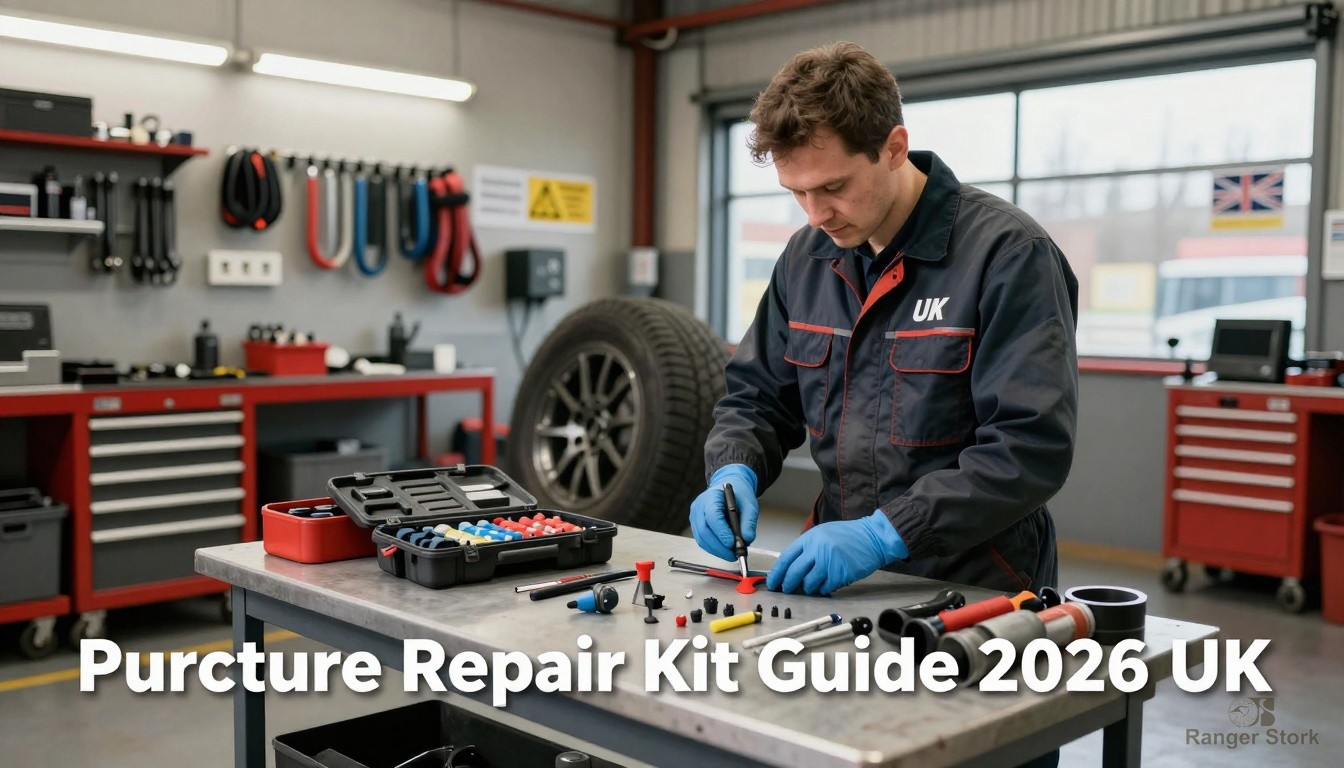
In the intricate machinery of the British automotive industry, the tyre remains the most critical point of contact between human engineering and the raw earth. As we navigate the landscape of 2026, the role of the professional workshop has transcended mere maintenance; it has become a sanctuary of technical precision and safety. A puncture is not simply a mechanical inconvenience—it is a disruption of the harmony of motion. To restore this balance, a technician must operate with the precision of an architect, utilizing tools of the highest calibre and adhering to the most stringent standards.
This definitive guide serves as the blueprint for professional puncture repair in the United Kingdom. We will explore the essential components of the modern repair kit, the legal mandates of BSAU159, the nuances of DVSA compliance, and the commercial strategies that drive workshop profitability. In an era where sustainability and safety are paramount, mastering the art of the permanent repair is the hallmark of a premier workshop.
1. The Legal Foundation: Understanding BSAU159 and the “Minor Repair Zone”
In the United Kingdom, the authority on tyre safety is encapsulated in the British Standard BSAU159. This is not merely a suggestion; it is the legal and technical framework that separates a professional repair from a dangerous liability. Every technician must understand that a repair is only valid if it restores the tyre’s structural integrity to a state that mirrors its original manufacture.
The Geography of Safety: Defining the T-Zone
The core of BSAU159 is the definition of the “Minor Repair Zone,” often referred to as the T-zone. This zone is the only area of the tyre where a permanent repair is legally permitted for passenger vehicles.
- Defining the Zone: Generally, the T-zone covers the central 60% to 70% of the tyre’s tread width. For a standard 205mm tyre, this means the repairable area is restricted to the central 123mm to 143mm.
- The Forbidden Borders: Repairs to the sidewall, the shoulder, or the bead area are strictly prohibited. These areas are subject to extreme flex and heat during operation. A repair in these zones is prone to catastrophic failure as the patch cannot maintain a bond against the constant deformation of the rubber.
- Speed Rating Variables: The size of the allowable repair zone shrinks as the speed rating of the tyre increases. For high-performance tyres (rated V, W, or Y), the margin for error is non-existent, and the T-zone is more restricted to ensure the casing can withstand the centrifugal forces of high-speed travel.
Mandatory Internal Inspection: The End of “String” Repairs
One of the most critical mandates of BSAU159 is the requirement for the tyre to be demounted from the rim. Roadside “string” repairs or external plugs are strictly temporary and do not comply with British Standards for workshop use.
A professional must inspect the internal liner for “run-flat” damage—often visible as a dark, marbled ring or a collection of rubber dust—which indicates the tyre’s structure has been compromised by heat. If such damage is present, the tyre is a “scrap” item, regardless of the puncture’s location. In 2026, with the prevalence of heavier Electric Vehicles (EVs), internal inspection is more vital than ever, as EV tyres experience higher load stresses that can mask structural fatigue.
2. The Anatomy of a Professional Puncture Repair Kit
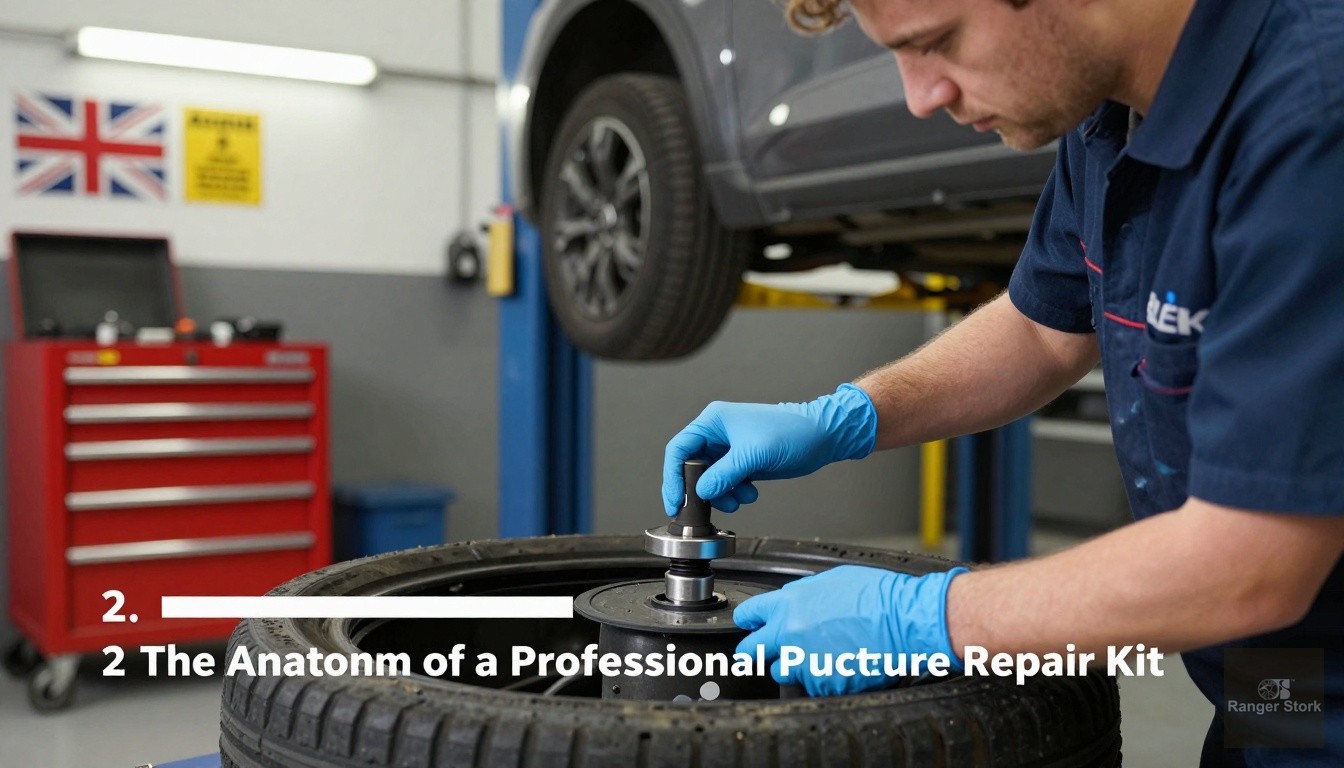
A professional workshop kit in 2026 is a curated collection of high-precision instruments. While entry-level kits may suffice for basic needs, a “Master Station” provides the versatility required for a high-volume tyre bay.
Essential Tools of the Trade
- T-Handle Reamers and Insertion Tools: Crafted from high-grade hardened steel, these tools are designed to navigate the high-tensile steel belts of modern radial tyres. The spiral reamer clears the puncture path and prepares the surface for the vulcanizing agent.
- Low-Speed Air Drills and Carbide Cutters: For the modern workshop, a manual reamer is often replaced by a carbide cutter. Operating at approximately 2,500 RPM, this tool ensures a clean, perpendicular path through the steel belts without causing delamination or fraying of the internal cords.
- The Stitcher Tool: Often overlooked, this small, serrated wheel is vital. It is used to apply concentrated pressure to the patch, rolling from the center outwards to evacuate all air pockets and ensure a 100% molecular bond.
- The Inner Liner Scraper: Used to remove the “mould release” lubricants from the interior of the tyre, ensuring the vulcanizing cement can reach the raw rubber.
Consumables: The Science of Vulcanization
- Mushroom Plugs (Combination Units): These are the gold standard. They feature a rubber stem to fill the puncture path (preventing moisture from corroding the steel belts) and an integrated patch to seal the inner liner.
- Patch Sizes (35mm to 80mm): A kit must stock a variety of sizes. A 35mm patch is typical for standard nail punctures, whereas 60mm or 80mm patches are required for larger injuries in commercial or reinforced (XL) tyres.
- Vulcanizing Cement: This is not a glue. It is a chemical catalyst that triggers a “cold vulcanization” process, fusing the repair unit and the tyre at a molecular level. In 2026, workshops are increasingly moving toward CFC-free, eco-friendly chemical solutions.
3. Mastering the Methodology: The Ritual of Restoration
A professional repair is a multi-stage process that requires patience and precision. The goal is not just to “plug a hole” but to rebuild the tyre’s integrity.
Step 1: Identification and Angle Assessment
After demounting and inspecting the tyre, the technician must identify the angle of the puncture. If the angle exceeds 15 to 25 degrees (depending on the specific repair unit manufacturer), a standard combination mushroom plug cannot be used, as the stem will be under too much tension. In such cases, a two-piece repair—consisting of a separate vulcanizing plug and a reinforced patch—is the only compliant solution.
Step 2: Cleaning and Preparing the Injury
Using a carbide cutter, the technician cleans the puncture path. This removes any oxidized steel and ensures the hole is uniform. The interior area around the injury is then buffed using a low-speed buffer to create a “velvet” texture.
* Precision Note: Over-buffing can expose the structural cords, rendering the tyre scrap. Under-buffing will leave the surface too smooth for the vulcanizing cement to bite into the rubber.
Step 3: Chemical Application and “Tack-Off” Time
The vulcanizing fluid is applied to the prepared area. A common error in busy workshops is the immediate application of the patch. The fluid must be allowed to “tack off”—usually 3 to 5 minutes depending on ambient temperature—to allow the solvent to evaporate. If the patch is applied while the fluid is wet, the solvent becomes trapped, leading to “blistering” and eventual failure of the repair under heat.
Step 4: The Insertion and Stitching Ritual
The mushroom plug is pulled through from the inside using pliers until the patch sits flush against the inner liner. The stitcher tool is then used aggressively, working from the center of the patch to the edges. Finally, an Inner Liner Sealer is applied over the edges of the patch and the buffed rubber to restore the airtight integrity of the tyre’s butyl liner, which was compromised during the buffing process.
4. DVSA MOT Guidelines and Legal Compliance
For any UK workshop, the Driver and Vehicle Standards Agency (DVSA) is the ultimate arbiter of quality. During an annual MOT test, tyre repairs are scrutinized with high intensity. A single non-compliant repair can lead to a vehicle fail and, more importantly, a loss of workshop reputation.
Why Repairs Fail the MOT
A tyre will receive a “Major” fail if:
1. Zone Infringement: The repair is located outside the BSAU159 T-zone.
2. Structural Integrity: The repair shows signs of lifting, cracking, or separation at the edges.
3. Temporary Fixes: A temporary “string” or “external plug” repair is present.
4. Repair Proximity: Too many repairs have been made in close proximity. BSAU159 dictates that repairs must not overlap and should be spaced appropriately to maintain the casing’s strength.
The Repair Zone Gauge: A Tool for Transparency
To ensure compliance, every professional kit should include a Repair Zone Gauge. This simple tool allows the technician to show the customer exactly why a tyre can or cannot be repaired. This transparency builds trust and protects the workshop from liability. By documenting the repair with digital photos of the internal casing and the final patch, workshops in 2026 are insulating themselves against legal disputes and proving their commitment to road safety.
5. Commercial Considerations: B2B Pricing and Profitability

From a business perspective, puncture repair is one of the highest-margin services a workshop can offer. However, the initial investment in quality equipment is key to long-term success.
The Pricing Spectrum for 2026
- Starter/Mobile Kits (£15 – £30): These contain basic T-handle tools and a limited selection of patches. They are suitable for low-volume garages but lack the specialized carbide cutters needed for high-performance tyres.
- Professional Master Stations (£80 – £150+): These provide a comprehensive range of carbide cutters, a full spectrum of combination units (mushroom plugs), and high-volume consumables. These kits are designed for durability and precision in a high-demand workshop environment.
Return on Investment (ROI) Analysis
The economics of puncture repair are highly favourable for the modern business owner:
* Consumable Cost: A high-quality mushroom plug and the necessary cement/sealer typically cost less than £3.50.
* Service Revenue: A professional, BSAU159-compliant repair in the UK typically commands a price of £25 to £50, including balancing.
* Profitability: With a margin often exceeding 80%, the initial cost of a £150 master kit can be recouped in as few as five or six repairs.
Furthermore, offering a certified repair service prevents “revenue leakage.” If a customer is told a repairable tyre must be replaced simply because the workshop lacks the correct kit, they may seek service elsewhere. Providing a compliant repair builds customer loyalty and establishes the workshop as a technical authority.
6. Training and Certification: The Human Element
The tools are the “body,” but the technician’s knowledge is the “spirit” of the repair. In 2026, the industry has moved away from informal “shadowing” toward formal certification.
The Value of Professional Certification
Organizations like the Institute of the Motor Industry (IMI) and City & Guilds offer specialized training for tyre technicians. A certified professional understands:
* The Chemistry of Polymers: Why different rubber compounds (such as those in winter tyres vs. summer tyres) require specific buffing techniques.
* Structural Physics: How a puncture affects the load-bearing capacity of a tyre’s carcass, especially in high-torque EV applications.
* Advanced Diagnostics: Identifying “hidden” damage, such as internal liner separation or bead damage caused by improper mounting.
Investing in staff training reduces “comebacks”—repairs that fail and require free rework. It also empowers the technician to act as a safety consultant, explaining the “why” behind the service to the customer. This level of expertise is what allows a workshop to charge a premium and stand out in a competitive market.
7. Special Considerations for 2026: EVs and Acoustic Tyres
As the UK fleet transitions to electric vehicles, workshops must adapt their repair techniques to handle new tyre technologies.
High-Torque and High-Load Repairs
EVs are significantly heavier than their internal combustion counterparts. This weight places immense pressure on the tyre’s sidewalls and tread. A repair that might hold on a light hatchback may fail on a heavy EV SUV. Technicians must be even more diligent about checking for internal casing fatigue and ensuring the vulcanization process is flawless.
Foam-Lined (Acoustic) Tyres
Many modern premium tyres, especially for EVs (like Tesla’s “Acoustic” tyres), feature a layer of sound-deadening foam adhered to the inner liner.
* The Repair Challenge: To perform a BSAU159 repair, a section of this foam must be carefully cut away and removed to allow the patch to bond directly to the rubber liner.
* The Restoration: After the repair is complete, some workshops choose to re-adhere the foam to maintain the tyre’s noise-reduction properties, though the primary focus must always be the airtight seal of the repair unit.
8. Frequently Asked Questions (FAQ)
Q: Can I repair a Run-Flat tyre?
A: Most manufacturers (such as Michelin and Continental) advise against repairing run-flat tyres because it is impossible to determine if the sidewall structure has been compromised during a “deflated” period. However, some manufacturers allow one repair in the central T-zone if the vehicle was not driven on the tyre while flat. Always consult the specific manufacturer’s guidelines.
Q: How many times can a single tyre be repaired?
A: Under BSAU159, a tyre can typically be repaired up to three times, provided the repairs do not overlap and the tyre’s speed rating allows for multiple repairs. For high-speed tyres (V-rated and above), the number of permitted repairs is often limited to one.
Q: Is it legal to use a “string” repair for an MOT?
A: No. An external “string” repair is considered a temporary fix. For a vehicle to pass an MOT, any puncture repair must be a permanent, internal repair (typically a mushroom plug) that complies with BSAU159.
Conclusion: The Harmony of Safety and Success
The professional puncture repair kit of 2026 is more than a box of tools; it is the cornerstone of a workshop’s commitment to excellence. By aligning the precision of the mushroom plug with the mandates of BSAU159 and the scrutiny of DVSA guidelines, a technician performs a vital service for society.
To achieve true harmony in the workshop:
1. Invest in Quality: Choose a comprehensive kit that supports a variety of tyre types, including those for EVs.
2. Follow the Standard: Never compromise on the T-zone or the requirement for internal inspection.
3. Master the Chemistry: Respect the “tack-off” time and use the stitcher tool with intent.
4. Educate the Customer: Use gauges and digital records to demonstrate your expertise and justify your pricing.
In the hands of a skilled technician, a puncture repair is not a patch—it is a restoration of balance, ensuring that every vehicle returns to the road with its safety and integrity fully preserved. Through this commitment to order and structure, the modern workshop fulfills its divine purpose in the automotive ecosystem.