
Blog
Car Wheel Brace Complete Guide UK 2026
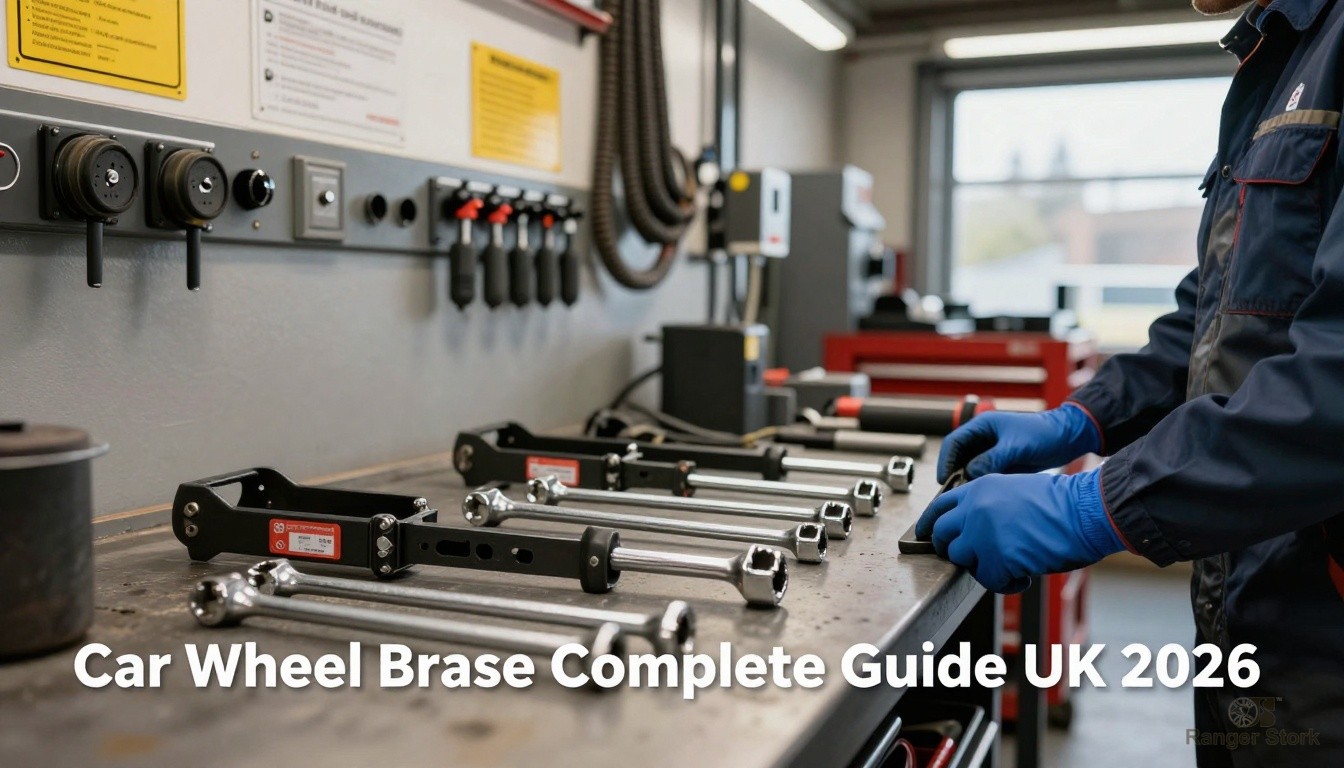
This guide shows you how to choose and use a car wheel brace in the UK. We cover the main types of tools for 2026. You will learn about socket sizes, torque settings, and prices. This information helps drivers and shop owners keep vehicles safe on the road.
Why You Need a Good Wheel Brace in 2026
A wheel brace is a tool used to turn the nuts on a car wheel. Every car should have one. In 2026, cars in the UK are changing. Many new cars are electric. These cars are very heavy. Many cars also have very large wheels made of alloy.
Old tools from ten years ago may not work on these new cars. You need a tool that is strong and fits correctly. If you use the wrong tool, you could hurt yourself. You could also damage the expensive wheels on the car.
The Driver and Vehicle Standards Agency (DVSA) sets the rules for UK roads. They say every car must be safe to drive. This includes having wheels that are put on correctly. Using a good wheel brace helps you follow these rules.
The Problem with Road Salt and Rust
In the UK, it rains a lot. In the winter, trucks put salt on the roads to stop ice. This salt causes a problem called rust. It can make the metal nuts stick to the wheel.
When a nut is stuck, it is very hard to turn. A cheap tool might bend or snap. You need a high-quality tool to break the nut loose without breaking the bolt. This is why choosing the right tool is a big deal for safety.
The Three Main Types of Wheel Braces
There are three main tools you can buy in 2026. Each one has a different job.
1. Telescopic Wheel Braces
These are the most popular tools for car owners. They have a handle that slides out to make it longer.
- How they work: When the handle is long, it gives you more power. This makes it much easier to turn a tight nut.
- Storage: They can shrink to a small size. This means they fit easily in the boot of a small car.
- Size: Most of these tools go from 35cm to 55cm long.
2. Spider Wheel Braces
These are also called cross braces. They look like a big plus sign (+).
- How they work: They have four ends. Each end is a different size. You use two hands to spin the tool quickly.
- Best use: These are great for people who work on cars at home or in a shop. They are very fast at taking nuts off once they are loose.
- Downside: They are big and do not fold. They take up a lot of space in a car.
3. Power Bars (Breaker Bars)
A power bar is a long, solid piece of metal. It does not fold or change size.
- How they work: Because they are solid and very long (usually 60cm), they are the strongest tool.
- Best use: These are for the toughest jobs. If a nut is rusted shut, a power bar will move it. They are best for big vans, 4×4 trucks, and heavy electric cars.
Understanding Socket Sizes: 17mm, 19mm, and 21mm
The “socket” is the part of the tool that fits over the nut. If you use the wrong size, you will strip the nut. This means the corners of the nut get rounded off, and you won’t be able to get it off at all.
In the UK, there are three main sizes you need to know:
- 17mm: You will find this size on many German cars like BMW, Audi, and VW.
- 19mm: This is the most common size. It is used on Fords and many cars from Japan.
- 21mm: This size is becoming very common in 2026. It is used on large SUVs and Tesla cars.
6-Point vs 12-Point Sockets
When you buy a tool, look for a “6-point” socket. This socket is shaped like a hexagon. It grips the flat sides of the nut. This is much safer than a 12-point socket, which is more likely to slip and ruin the nut.
Thin-Wall Sockets
Modern alloy wheels often have very tight holes for the nuts. A normal, thick socket might not fit in the hole. You may need a “thin-wall” socket. These are made of very strong steel so they can be thin but still work well. Many also have a plastic cover to stop the tool from scratching the paint on the wheel.
All About Torque: The 80-120Nm Rule
“Torque” is a word for how tight you turn something. In the UK, we measure this in Newton-meters (Nm).
Getting the tightness right is the most important part of changing a tyre.
- Too loose: The wheel could wobble and fall off while you are driving.
- Too tight: You could stretch the metal bolts. They might snap later when you are driving fast.
Common Torque Settings
- Small and Medium Cars: Usually 80Nm to 100Nm.
- Large SUVs and Vans: Usually 110Nm to 120Nm.
- Heavy Electric Cars: Some need 140Nm or more.
How to get it right: You should use your wheel brace to get the nuts snug. Then, you should use a tool called a “torque wrench” to finish the job. A torque wrench clicks when the nut is exactly tight enough. You can find the correct number for your car in the owner’s manual.
Dealing with Locking Wheel Nuts
Most cars in the UK have “locking wheel nuts.” This is one nut on each wheel that is different from the others. It stops thieves from stealing your wheels. You need a special “key” to take this nut off.
Tips for Locking Nuts
- Be gentle: The patterns on these nuts are often thin. If you push too hard or the tool slips, you will break the lock.
- Order of work: Always loosen the locking nut first. When putting the wheel back on, always tighten the locking nut last.
- Keep it clean: Use a brush to get dirt and salt out of the locking nut before you put the key in.
If you break the locking nut or lose the key, it is a big problem. A garage in the UK might charge you £100 or more to remove a broken locking nut.
UK Rules and Road Safety (DVSA)
The DVSA is the group that checks if cars are safe in the UK. They do not make you carry a wheel brace by law. However, they do say the driver is responsible for the car’s safety.
If a wheel comes off your car because you didn’t tighten the nuts correctly, the police can fine you. You could also get points on your driving license.
Rules for Businesses (Fleets)
If you own a business with vans or cars, you must follow “PUWER” rules. This means any tool you give to a worker must be safe and good for the job. Giving a worker a cheap, weak wheel brace is a risk. If the tool snaps and the worker gets hurt, the business could be in legal trouble.
Buying Guide: Prices for 2026
How much should you spend on a wheel brace? Here is a simple breakdown of prices in the UK market.
| Price Range | Quality Level | Best For |
|---|---|---|
| £8 to £20 | Basic / Entry-level | Keeping in the boot for emergencies. |
| £25 to £50 | Good / Mid-range | Business owners and people who drive a lot. |
| £50 to £80 | Professional | Garages and heavy-duty trucks. |
Why Price Matters
Cheap tools (under £15) are often made of “carbon steel.” This metal is okay, but it can bend if you push too hard.
Better tools (over £25) are made of “Chrome Vanadium” (Cr-V). This is a very strong type of steel. It does not rust easily and it will not bend under normal use. For a business, it is better to buy one £40 tool that lasts five years than five £10 tools that break every year.
How to Safely Change a Wheel
Using a wheel brace is only part of the job. Follow these steps to stay safe:
- Find a safe spot: Park on flat, firm ground away from traffic.
- Apply the brake: Put the handbrake on and put the car in gear (or “Park”).
- Loosen the nuts: Use your wheel brace to loosen the nuts before you lift the car with a jack. Only turn them half a turn.
- Jack up the car: Lift the car until the tyre is off the ground.
- Remove the nuts: Take the nuts off the rest of the way.
- Swap the wheel: Put the new wheel on.
- Tighten by hand: Put the nuts back on and tighten them with your hand.
- Lower the car: Let the car back down to the ground.
- Final tighten: Use the wheel brace to tighten the nuts firmly.
- Check again: After driving for 20 miles, check the nuts again to make sure they are still tight.
Summary: What You Should Buy
To stay safe in 2026, here is the best plan:
- For most drivers: Buy a high-quality telescopic wheel brace. Look for one made of Chrome Vanadium steel. Make sure it comes with 17mm, 19mm, and 21mm sockets.
- For home mechanics: A spider brace is a great addition to your garage. It makes the work faster.
- For van owners: Buy a power bar. It is the only tool that will reliably move heavy-duty nuts that have been on the road for a long time.
Always remember to check your socket size. A 19mm socket will not work on a 21mm nut. Keeping the right tools in your car ensures that a flat tyre does not turn into a nightmare. Stay safe, check your tools once a year, and always keep your locking nut key in a place where you can find it.