
Blog
Digital Tyre Pressure Gauge Complete Buying Guide UK 2026: Precision, Compliance, and the EV Revolution
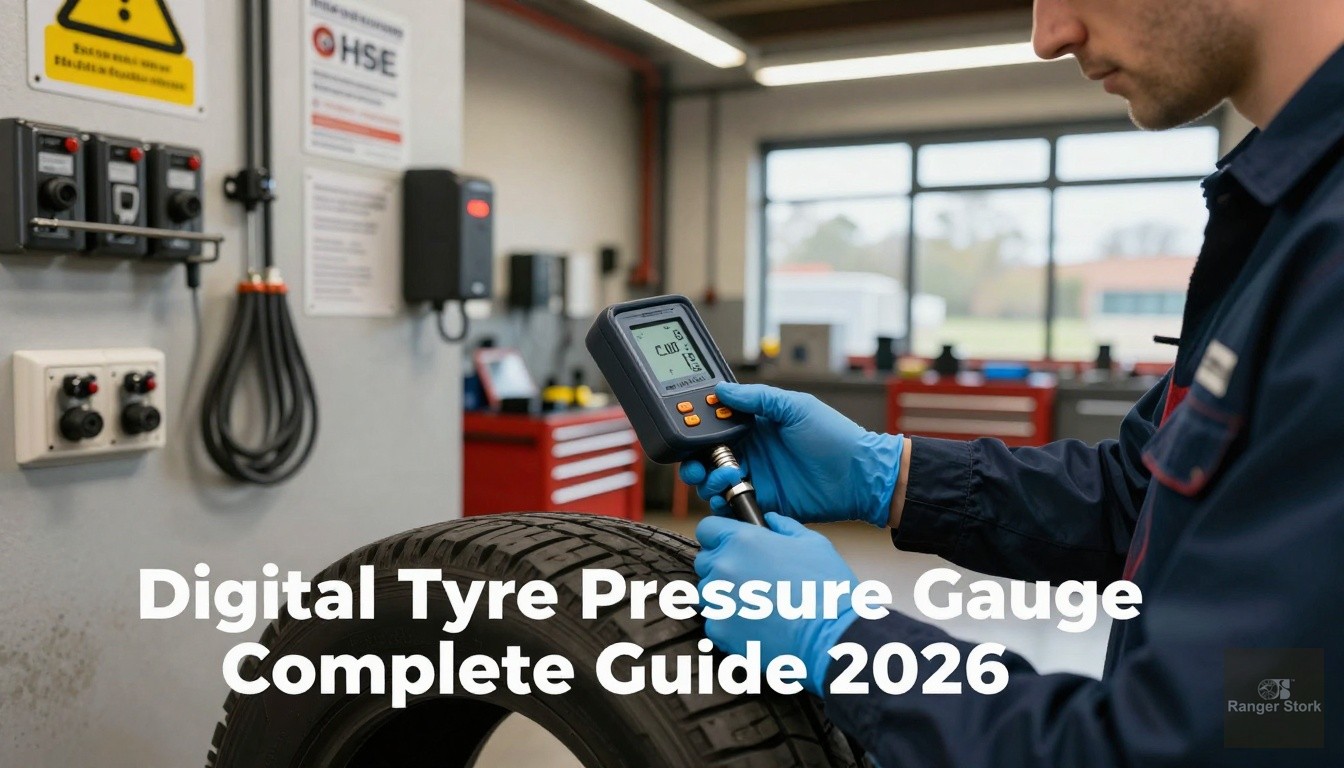
The automotive landscape in the United Kingdom is undergoing its most significant transformation since the invention of the internal combustion engine. As we navigate through 2026, the intersection of electric mobility, stringent safety mandates, and the relentless pursuit of operational efficiency has redefined the requirements for basic maintenance tools. No longer is the tyre pressure gauge a secondary consideration; it has become a critical piece of precision engineering, essential for the modern workshop’s arsenal.
For fleet managers, workshop proprietors, and discerning motorists, understanding the nuances of digital tyre pressure measurement is a prerequisite for safety, vehicle longevity, and cost-management. This comprehensive guide serves as the definitive blueprint for selecting professional-grade digital tyre pressure gauges and wall-mounted inflation systems, ensuring that every pound invested in the UK market translates into measurable performance and road safety.
1. The Architecture of Modern Measurement: Handheld vs. Wall-Mounted Systems
In the professional UK automotive sector, the first strategic decision involves choosing the correct form factor for the environment. The year 2026 has seen a divergence in technology where handheld mobility meets the automated power of fixed stations.
Professional Handheld Digital Gauges: The Mobile Vanguard
Handheld gauges remain the primary choice for rapid inspections, roadside assistance, and mobile tyre fitting services. Modern professional units are no longer the plastic novelties of the past. They are now constructed from high-impact composite materials or die-cast aluminium, designed to survive the rigours of a busy workshop floor.
- Advanced Sensor Technology: Modern handhelds utilize piezoelectric pressure sensors that convert mechanical stress into an electrical signal with microscopic precision. This allows for a resolution of 0.1 PSI, providing a level of detail that allows technicians to identify slow punctures or bead leaks that would be invisible on an analogue dial.
- Ergonomics and Occupational Health: With the UK’s often overcast weather and dark winter afternoons, high-contrast backlit LCD screens have become standard. Ergonomic “pistol-grip” designs are not merely for comfort; they reduce repetitive strain during multi-vehicle fleet inspections, aligning with UK health and safety best practices.
- Power Management: The shift toward lithium-ion rechargeable cells in high-end units (approaching the £150 mark) ensures that the tool is always ready. These units often feature USB-C fast charging, avoiding the “dead battery” syndrome common with cheaper coin-cell alternatives that fail at critical moments.
Wall-Mounted Inflation Systems: The Backbone of High-Volume Service
Wall-mounted systems are the backbone of high-volume service centres, MOT bays, and petrol forecourts. Their primary advantage is the decoupling of the operator from the inflation process, ensuring both safety and consistency.
- “Set and Forget” Automation: The operator inputs the desired pressure, and the system automatically cycles through inflation and deflation to hit the target. This eliminates the “human factor” where a distracted technician might over-inflate a tyre. This automation allows the technician to perform other tasks, such as checking tread depth or inspecting brake pads, while the system manages the air.
- Industrial Durability: Designed for 24/7 exposure to the British elements—from salt-heavy coastal air to freezing inland winters—these units feature IP-rated weatherproofing (typically IP54 or higher). They utilize reinforced, long-reach hoses capable of reaching the rear wheels of a long-wheelbase Mercedes-Benz Sprinter or a heavy-duty EV van without straining the manifold.
- B2B Connectivity: Many 2026 models now feature cloud connectivity and IoT integration. Workshop managers can track “inflation events,” which provides vital data for billing in commercial settings or resource management in large-scale logistics hubs.
2. The Gold Standard of Accuracy: Decoding BS EN 12645
In the United Kingdom, accuracy is not a subjective claim; it is a strictly regulated standard. The BS EN 12645 is the benchmark for pressure gauges used for inflating pneumatic tyres. For any B2B buyer, this certification is the non-negotiable line in the sand between a professional tool and a consumer toy.
Why BS EN 12645 is the Industry Mandate
This standard ensures that a measurement device maintains its integrity across a wide range of operational variables. In a professional setting, a gauge must be more than “close enough”; it must be legally defensible.
- Thermal Stability: A gauge must provide the same reading at -10°C in the Scottish Highlands as it does at 30°C in a London heatwave. BS EN 12645 testing ensures the internal electronics and sensors do not drift due to ambient temperature fluctuations.
- Hysteresis Management: The gauge must remain accurate whether it is approaching the target pressure from a higher starting point (deflating) or a lower starting point (inflating).
- Metrological Repeatability: If a technician tests the same tyre five times in succession, the reading must be identical. Inconsistency in readings is the first sign of a failing sensor or poor internal calibration.
The Legal and Liability Framework
In 2026, with the UK government’s “Vision Zero” strategy aimed at eliminating road deaths, the legal implications of using non-compliant equipment are severe. Under the Provision and Use of Work Equipment Regulations 1998 (PUWER), employers in the UK must ensure that work equipment is “suitable for the use for which it is provided.”
If a commercial vehicle is involved in a high-speed accident and it is discovered that its tyres were serviced with non-calibrated or non-compliant gauges, the liability can shift toward the maintenance provider. Using a BS EN 12645 certified gauge is a primary layer of protection against professional negligence claims.
3. The Digital Edge: PSI, BAR, and TPMS Integration
The modern UK fleet is a complex tapestry of domestic, European, and Asian-manufactured vehicles. This diversity requires tools that can speak multiple “languages” of measurement and interact with internal vehicle sensors.
Unit Versatility: A Global Requirement
While PSI (pounds per square inch) remains the dominant unit for the British public, the technical reality is more varied. Professional digital gauges allow for instantaneous toggling between:
* PSI: The standard for most UK road users and light commercial vehicles.
* BAR: The preferred metric for European manufacturers (BMW, Audi, Volvo) and often found in technical workshop manuals.
* kPa (Kilopascal): Increasingly used in heavy industrial, agricultural, and specialized commercial applications.
TPMS (Tyre Pressure Monitoring Systems) Synergy
Since 2014, TPMS has been mandatory for all new passenger cars in the UK. By 2026, this technology has matured, and professional gauges have evolved to act as diagnostic bridges.
High-end digital gauges in the £100–£150 range now often include TPMS “trigger” capabilities. This allows a technician to:
* Verify Sensor Transmission: Ensure the internal wheel sensor is actually transmitting a signal to the vehicle’s ECU.
* Monitor Battery Health: Check the remaining life of the TPMS sensor battery without the costly process of removing the tyre from the rim.
* Calibration Alignment: Synchronize the physical gauge reading with the vehicle’s dashboard display, eliminating customer complaints about “ghost” warning lights.
This integration is essential for modern workshops. If a customer complains of a TPMS warning light, the professional gauge determines if the issue is a genuine pressure loss, a faulty sensor, or a software calibration error.
4. The Electric Revolution: Specific Requirements for EV Tyres
The rapid adoption of Electric Vehicles (EVs) in the UK has fundamentally altered the physics of tyre maintenance. EVs present two unique challenges that demand high-precision digital tools: Massive Kerb Weight and Instantaneous Torque.
The Weight Factor and Sidewall Integrity
An electric SUV, such as an Audi Q8 e-tron or a Tesla Model X, can weigh significantly more than its internal combustion engine (ICE) equivalent due to the substantial battery pack. This places immense stress on the tyre sidewalls.
To compensate, EVs often utilize “HL” (High Load) or “XL” (Extra Load) tyres which require higher operating pressures—often exceeding 45 or 50 PSI for standard passenger use. A digital gauge used for EVs must be robust enough to handle these higher pressures with extreme precision, as even a 1 PSI deviation can affect the structural integrity of a heavily loaded sidewall.
Rolling Resistance and the “Range” Imperative
In an EV, tyre pressure is the single most important maintenance factor affecting driving range. Under-inflation by as little as 3 PSI can increase rolling resistance by up to 6%, stripping valuable miles away from the vehicle’s total range. For fleet operators of electric delivery vans (like the Amazon Rivian fleet or Royal Mail’s electric fleet), this translates directly into higher charging costs and decreased daily productivity. Digital gauges allow for the “fine-tuning” required to maintain the exact manufacturer specification.
Temperature Compensation and Friction
Advanced digital gauges in 2026 now feature temperature-compensated readings. Because EV batteries generate heat that can transfer to the axles, and because high torque loads generate friction heat quickly, tyres on EVs can run hotter than those on ICE vehicles. Smart gauges can adjust the displayed pressure to provide a “cold” equivalent, which is the industry standard for setting baseline pressures.
5. B2B Procurement: Pricing, Calibration, and ROI
When purchasing for a business, the initial price tag is merely the entry point. The Total Cost of Ownership (TCO) is determined by the gauge’s durability, its impact on workflow, and its compliance status.
The Professional Pricing Tiers
- £20 – £50 (Entry-Level Professional): These are typically high-quality handheld units. They are BS EN 12645 compliant but may lack advanced features like TPMS triggering or rechargeable batteries. They are ideal for individual technicians or as “backup” units in a workshop.
- £50 – £100 (Mid-Range): This tier introduces ruggedized housings (rubberised over-moulding), larger backlit displays, and improved accuracy certifications. These are the “workhorses” suitable for high-frequency use in tyre bays and MOT centres.
- £100 – £150+ (Advanced/Integrated): These units are the pinnacle of 2026 technology. They feature Bluetooth data logging, TPMS diagnostics, and ultra-high-pressure capabilities for commercial vehicles. These are investments in data integrity and advanced service offerings.
The Critical Necessity of Annual Calibration
A digital gauge is a scientific instrument, and like all instruments, it is subject to “drift.” In the UK, professional workshops should have their gauges calibrated annually to a “traceable” standard.
- ISO 9001 Compliance: For businesses seeking or maintaining ISO certification, a documented calibration log is mandatory.
- Safety Audits: Many insurance providers and trade bodies, such as the National Tyre Distributors Association (NTDA), require proof of equipment accuracy during annual audits.
- The Calibration Process: This involves comparing the gauge against a “Master Gauge” in a controlled environment. Leading UK manufacturers, such as PCL in Sheffield, offer dedicated calibration services that provide a formal Certificate of Conformity, which serves as a legal document of accuracy.
Calculating the Return on Investment (ROI)
The ROI on a high-end £150 gauge is realized through three primary channels:
1. Labour Efficiency: Faster, more accurate readings mean more vehicles can be processed per hour.
2. Reduction in Claims: Correct inflation prevents premature tyre wear and catastrophic blowouts, reducing warranty claims and customer disputes.
3. Digital Trust: Bluetooth-enabled gauges can send readings directly to a customer’s digital service record or a fleet manager’s dashboard, building a level of transparency that justifies premium service rates.
6. Market Overview 2026: Leading Brands and Innovations
The UK market is dominated by a few key players who have mastered the balance of traditional British engineering and modern digital technology.
PCL (Pneumatic Components Ltd)
Based in Sheffield, PCL is the “gold standard” for the UK automotive industry. Their ACCURA range of digital gauges is ubiquitous in professional tyre shops. They are renowned for their “ceramic sensor” technology, which offers incredible longevity even in the abrasive, dusty, or oily environments of a heavy-duty workshop.
Ring Automotive
A major player in the UK automotive aftermarket, Ring offers digital gauges that lean heavily into the “smart” side of the industry. Their units often feature integrated LED work lights and highly intuitive interfaces that are particularly popular with mobile mechanics and breakdown recovery services.
Schrader
As a global leader in TPMS technology, Schrader’s digital tools are the go-to for workshops that specialize in sensor programming and high-end vehicle maintenance. Their tools are often the most advanced in terms of vehicle electronics integration, providing a seamless link between the tyre and the car’s computer.
The Rise of “Smart” Inflation Stations
In 2026, we are seeing the rise of cloud-connected inflation towers. These systems can text a customer their tyre pressure report or alert a fleet manager if a specific vehicle is consistently showing low pressure, indicating a slow puncture or a driver’s poor habits. This data-driven approach is transforming tyre maintenance from a reactive task to a proactive strategy.
7. Frequently Asked Questions (Professional Insights)
Q: Is a digital gauge more durable than an analogue one?
A: Paradoxically, yes. While analogue gauges use delicate mechanical springs and “Bourdon tubes” that can be knocked out of calibration by a single drop, modern digital gauges use solid-state sensors. When housed in high-impact casings, digital gauges are significantly more resilient to the shocks and vibrations of a workshop environment.
Q: Can I use a standard digital gauge for heavy electric vans?
A: You must check the maximum pressure rating. Many standard consumer gauges max out at 50-60 PSI. For heavy electric vans or commercial vehicles, you require a gauge with a range of at least 100-150 PSI to ensure accurate readings at the higher pressures these vehicles demand.
Q: What is the significance of the IP rating for wall-mounted units?
A: In the UK climate, an IP54 rating is the minimum requirement. This ensures the unit is protected against dust ingress and splashing water from any direction. For coastal locations or areas with high-pressure wash systems nearby, an IP65 rating is recommended for total protection.
Conclusion: Future-Proofing Your Workshop
As we look toward the remainder of 2026 and beyond, the message for UK automotive professionals is clear: Precision is the ultimate currency. The transition from analogue to digital is not merely a trend; it is a necessary response to the increasing complexity of the vehicles we drive and the legal frameworks within which we operate.
Investing in a high-quality digital tyre pressure gauge—whether it is a £30 handheld for a mobile fitter or a £150 integrated TPMS system for a main dealer—is an investment in the integrity of the service provided. By prioritizing BS EN 12645 compliance, EV compatibility, and regular calibration, you ensure that your business remains at the forefront of safety and efficiency.
The road ahead is paved with innovation. By choosing the right tools today, you are not just inflating tyres; you are preserving the harmony of the UK’s transport network, ensuring safety for every road user, and future-proofing your business against the technological shifts of the next decade.
Actionable Takeaways for B2B Buyers:
- Inventory Audit: Conduct an immediate audit of all current gauges. Any unit without BS EN 12645 certification should be relegated to non-critical tasks or replaced.
- EV Readiness: Verify that your current equipment can handle the higher PSI requirements and precision needs of the growing EV car parc.
- Calibration Schedule: Implement a rigorous, documented annual calibration schedule to maintain “Approved Garage” status and ensure legal protection.
- TPMS Integration: Invest in at least one high-end diagnostic gauge with TPMS triggering capabilities to capture the high-margin sensor service market.