
Blog
The Definitive 2026 Buying Guide to Tyre Changing Machines for UK Workshops: Precision, Protection, and Profitability
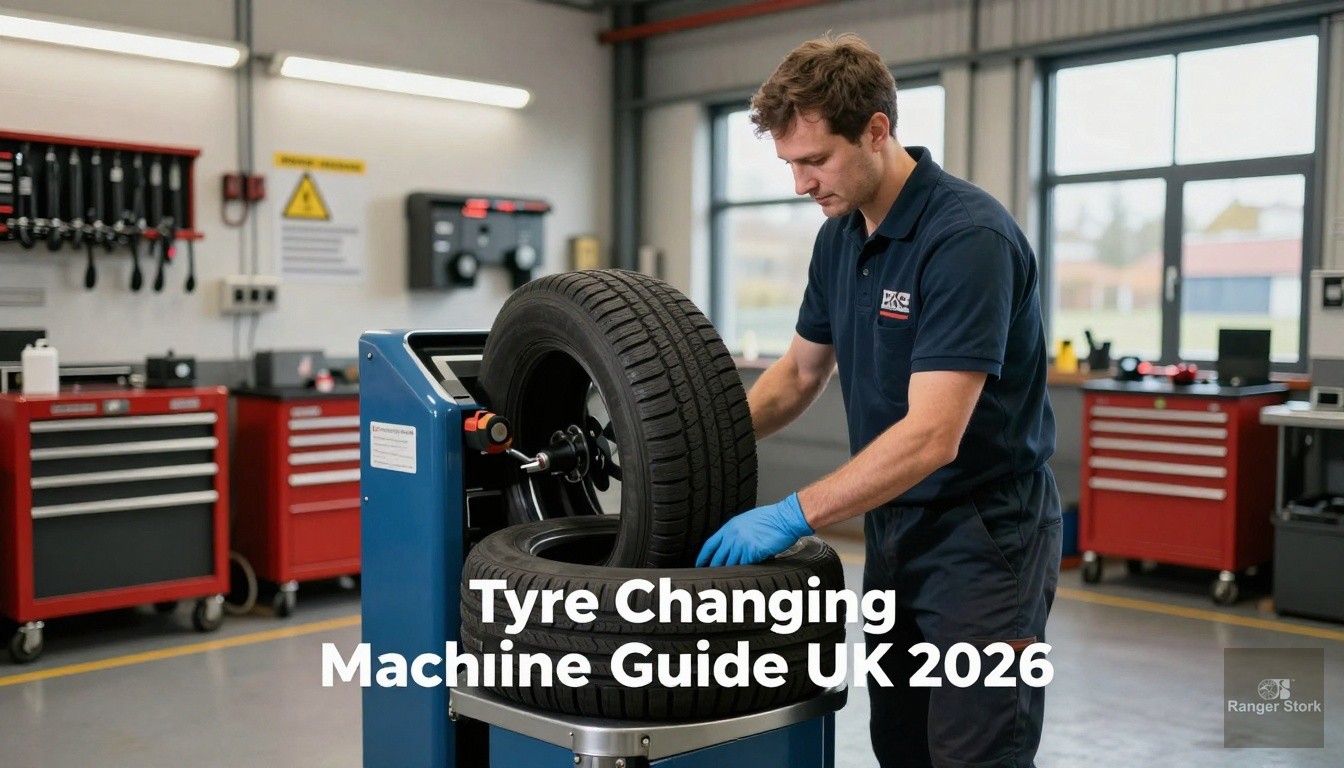
The landscape of the United Kingdom’s automotive aftermarket is undergoing a seismic shift. As we navigate through 2026, the traditional “tyre bay” is being reimagined as a high-tech precision environment. The convergence of heavy Electric Vehicles (EVs), the ubiquity of ultra-low-profile tyres, and the aesthetic dominance of large-diameter diamond-cut alloy wheels has rendered legacy equipment not just obsolete, but a liability.
To remain competitive and profitable, UK workshop owners must view their tyre changer not as a simple tool, but as a strategic investment in risk mitigation and operational throughput. This guide serves as a beacon for those looking to navigate the complexities of modern tyre changing technology, from semi-automatic workhorses to the pinnacle of leverless centre-post engineering.
1. The Paradigm Shift: Why Leverless Technology is Essential for 2026
In the context of 2026, leverless technology—often referred to as “touchless”—is no longer a luxury reserved for specialist performance shops; it is a strategic necessity for any workshop aiming to mitigate risk. As vehicle manufacturers move toward larger wheel diameters and thinner tyre sidewalls, the physical force required to manipulate a tyre bead over a rim edge using a traditional lever has reached a point of diminishing returns. The physics of modern rubber simply do not favour the manual pry bar.
The End of Human Error and Costly Claims
Leverless machines utilize a mechanical “finger” or integrated tool head that precisely hooks the bead and lifts it without ever making contact with the alloy surface. This eliminates the “human error” factor where a metal lever might slip and gouge a rim—a mistake that can cost a UK workshop upwards of £150 to £300 for a single diamond-cut repair.
Why is this transition becoming essential? Because the margin for error has vanished. Modern wheels are often finished with delicate lacquers and intricate CNC-machined faces. A single slip on a high-performance rim can wipe out the profit of an entire week’s tyre sales. By removing the lever from the equation, you remove the primary source of insurance claims and customer disputes.
Prioritising Technician Health and Safety
Beyond the financial implications of damaged stock, there is the human element. The UK Health and Safety Executive (HSE) highlights that manual handling and repetitive strain are leading causes of absence in the motor trade. Research indicates that using a traditional tyre lever on a stiff run-flat tyre can require over 40kg of manual force from the operator.
In contrast, leverless machines and those equipped with pneumatic assist arms (often called ‘helper arms’) reduce the manual force required to near zero. This not only prevents long-term musculoskeletal injury but also maintains a consistent work pace throughout an eight-hour shift. Transitioning to leverless technology allows a technician to handle the most difficult Ultra-High Performance (UHP) and run-flat tyres with the same ease as a standard 15-inch steel wheel. This consistency is the bedrock of a productive workshop, directly addressing long-term health and safety concerns and improving staff retention in a competitive labour market.
2. The Electric Vehicle Revolution and Equipment Requirements
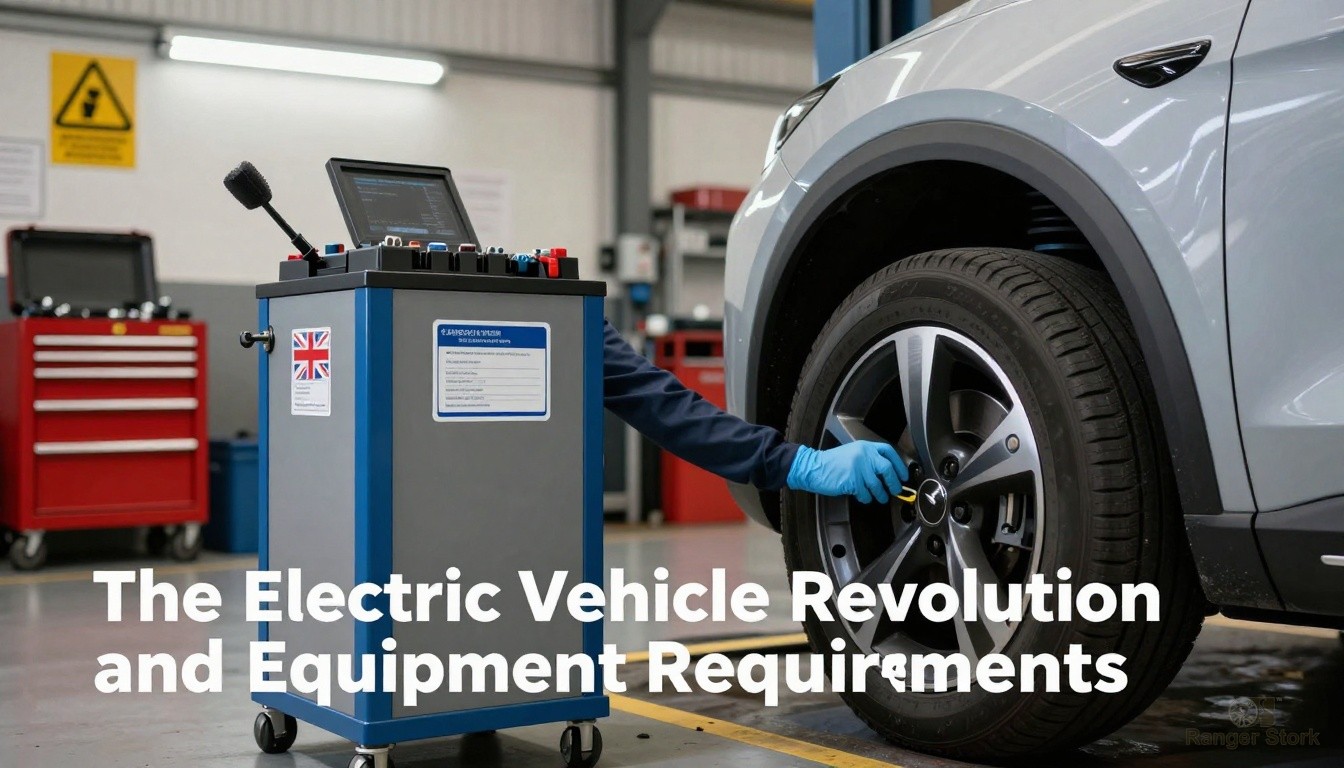
The rise of Electric Vehicles (EVs) is perhaps the most significant influence on equipment choice in the current market. EVs present a unique challenge due to their immense weight and the specific tyres they utilize to manage that mass. Most EVs are significantly heavier than their internal combustion counterparts, necessitating tyres with reinforced sidewalls, often carrying “Extra Load” (XL) or the newer “High Load” (HL) ratings.
Managing Reinforced Sidewalls and High-Load Tyres
These tyres are designed to handle the heavy battery weight and the instant torque characteristic of electric motors, making them notoriously stiff and difficult to mount. According to recent SMMT data, EV registrations in the UK continue to grow, with many new models featuring 20-inch wheels as standard. Tyres specifically designed for EVs, such as the Michelin Pilot Sport EV or Pirelli P Zero Elect, feature higher load indices and carcasses that resist deformation.
A workshop in 2026 needs a machine with a high bead-breaker force—ideally exceeding 3,000kg—to ensure the bead can be broken without damaging the tyre’s internal structure or the rim’s sensitive Tyre Pressure Monitoring Systems (TPMS). If the bead breaker is underpowered, the technician is forced to cycle the blade multiple times, increasing the risk of sidewall bruising or sensor damage.
The “EV-Ready” Workshop Architecture
Furthermore, EVs often come standard with 20-inch rims or larger to accommodate hefty braking systems and improve aesthetics. Therefore, a machine with a wide clamping range (up to 30 inches) and high-torque motors is essential to ensure the workshop can service the growing fleet of Teslas, VW ID models, and Hyundai Ioniqs without struggling or stalling.
The “EV-ready” workshop is one that anticipates these physical demands, investing in robust assist arm systems that can manage these rigid carcasses without the technician having to fight the machine. As the UK moves closer to the 2035 transition, the ability to service EVs efficiently will become the primary differentiator between a thriving garage and one that is struggling to keep up with the modern vehicle parc.
3. Mechanical Design Philosophies: Swing-Arm vs. Tilt-Back Productivity
When selecting a tyre changer, the physical architecture of the machine dictates the workflow and the space requirements of the workshop. The choice between a swing-arm and a tilt-back (fully automatic) design is a delicate balance of floor space, budget, and speed.
Swing-Arm: The Space-Saving Solution for Smaller Bays
A swing-arm machine is generally more compact because the vertical column remains stationary, and the arm swings out to the side. This is ideal for smaller UK garages or mobile tyre fitting vans where every square inch of floor space must be accounted for.
However, the swing-arm design requires manual locking of the head position for every wheel. This can be a bottleneck in high-volume environments. While modern swing-arm units are increasingly robust, they generally lack the absolute rigidity required for the constant mounting of low-profile 22-inch tyres without slight flex, which can lead to rim contact if the operator is not hyper-vigilant.
Tilt-Back: The Productivity Powerhouse
Conversely, a tilt-back or fully automatic machine uses a pneumatic cylinder to tilt the entire rear column back, allowing for much faster positioning and consistent mounting head placement. While this requires more “depth” in the workshop layout to allow for the column’s movement, it offers superior rigidity.
In a high-volume environment, the tilt-back design reduces setup time per wheel by 15-20%, which significantly impacts the daily throughput and overall profitability of the tyre bay. Time-motion studies in professional tyre workshops demonstrate that a fully automatic tilt-back machine with a dual assist arm can complete a tyre change on a UHP wheel in approximately 4-5 minutes, compared to 8-10 minutes on a basic swing-arm machine without assistance. Over a busy day consisting of 30 tyre changes, this efficiency gain saves nearly 2.5 hours of labour. At a standard UK workshop labour rate of £80-£120 per hour, the more expensive machine pays for its price premium relative to a budget unit within the first 6 months of operation through labour savings alone.
4. Specifications that Matter: Bead Breaker Force and Clamping Range
In the search for new equipment, it is tempting to focus on the lowest initial price point. However, this is a “false economy” in the modern tyre industry.
The False Economy of Low-Power Units
A machine with a weak bead breaker (e.g., under 2,000kg) will struggle with modern run-flat and UHP tyres, leading to technician frustration and potential damage to the tyre’s internal structure. When a bead breaker lacks the necessary punch, it often results in the blade “skating” off the tyre or failing to drop the bead into the well. This forces the technician to use excessive manual force or incorrect tools to finish the job, risking both the rim and their own safety. High bead-breaking power (ideally 2,800kg to 3,500kg) is no longer an optional extra; it is a foundational requirement for 2026.
Understanding Real-World Clamping and Rim Diameters
Similarly, the clamping range of a machine is a critical specification that is often misunderstood. While 30-inch rims remain a niche in the general market, the “clamping range” of a machine is often measured externally. A machine rated for “24-inch” external clamping may only handle a 22-inch rim comfortably once the thickness of the alloy and the protector pads are factored in.
With the 2026 trend of 23-inch and 24-inch factory options on vehicles like the Range Rover Sport, Lotus Eletre, or Lamborghini Urus, a machine with a 30-inch theoretical limit provides the necessary “clamping margin” to handle these luxury vehicles safely and securely. By prioritising a machine with a 10-30 inch range, a workshop ensures it can say “yes” to every customer. This versatility is what allows a business to recoup its investment faster, as they can handle the high-margin “specialist” jobs that budget-constrained competitors are forced to turn away.
5. Protecting the Asset: Alloy Wheel Safety and Financial Liability
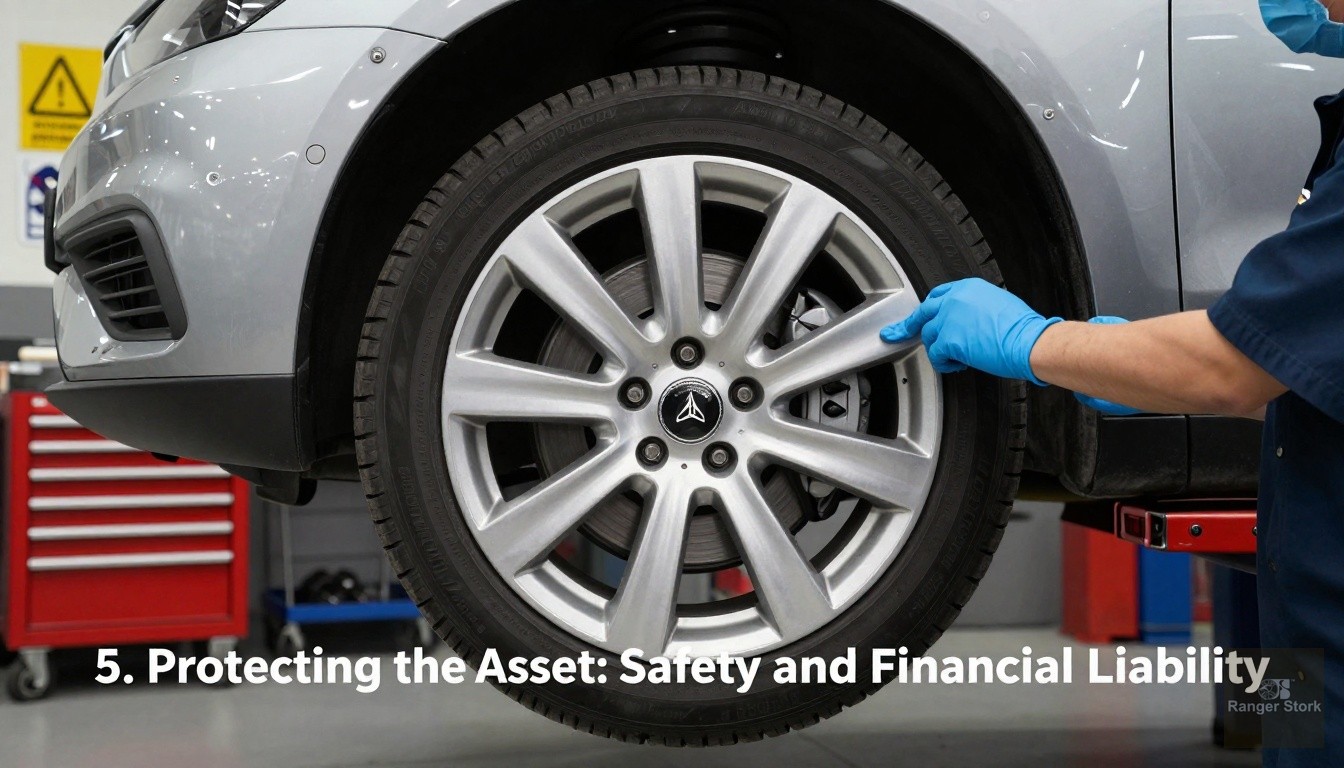
Financial liability in a tyre shop often stems from “rim rash” or tool-head gouges on expensive alloys. The prevalence of diamond-cut alloy wheels in the UK has skyrocketed, appearing even on entry-level hatchbacks and family SUVs.
The Rising Cost of Damage in the UK Market
These wheels are notoriously difficult and expensive to repair. Unlike traditional painted wheels, diamond-cut rims require a CNC lathe to remove a thin layer of the face to restore the finish. A survey of UK wheel refurbishment specialists suggests that the average cost to repair a single diamond-cut wheel ranges from £100 to £180, often requiring the car to be off the road for several days.
If a machine lacks adequate protection features and damages a set of four wheels, the workshop faces a liability exceeding £600 plus the loss of customer trust and potential insurance premium hikes. In the age of social media, a single photo of a damaged rim posted to a local community group can cause irreparable brand damage.
Multi-Layered Protection Strategies
Modern machines mitigate this through a multi-layered protection strategy:
1. Polymer Mounting Heads: Tool heads made of high-grade polymers or fitted with replaceable plastic inserts act as a buffer between the metal tool and the rim.
2. Turntable Protection: Jaws are equipped with high-density plastic covers to prevent “bite marks” on the inner or outer rim flange.
3. Automatic Clearance: Advanced machines feature “automatic clearance” settings where the tool head is pneumatically locked a few millimetres away from the rim edge both vertically and horizontally.
4. Bead Breaker Protection: Plastic covers for the bead breaker blade and the back-rest ensure the sidewall and rim edge are never in contact with bare metal.
In a market where a set of Range Rover or Porsche wheels can cost £4,000+, these features act as an essential insurance policy. One avoided damage claim can pay for the price difference between a budget machine and a mid-range professional unit.
6. The Economics of High-End Investment: Centre-Post vs. Entry-Level
The price gap in the UK market is significant, with entry-level units starting around £1,500 and high-end centre-post machines reaching £15,000. This ten-fold difference in price is justified by three pillars: Volume, Value, and Versatility.
Why Invest £15,000 in a Centre-Post Machine?
A high-end centre-post, leverless machine is designed for 24/7 operation in high-volume environments where “downtime” is not an option. These machines often include integrated wheel lifts to save the technician’s back—a vital consideration given that some modern SUV wheel and tyre assemblies can weigh over 40kg.
The Superiority of Centre-Clamping
Centre-clamping systems are a revelation in the industry. Unlike traditional turntables that use four jaws to grip the rim (which can slip or distort the wheel), a centre-post machine secures the wheel through the centre bore using a locking nut and cone—similar to a wheel balancer.
Benefits of Centre-Clamping include:
* Zero Rim Contact: No jaws touching the outside of the rim.
* Faster Setup: No need to adjust jaw positions for different wheel sizes.
* Infinite Torque: The wheel is locked securely, allowing for the rotation of even the stiffest run-flat tyres without the wheel spinning in the jaws.
* Perfect Centering: Ensures the tyre is mounted perfectly relative to the wheel’s geometric centre.
Furthermore, these elite machines are often “diagnostic,” meaning they can detect rim run-out or tyre defects during the mounting process. For a specialist performance shop or a high-end dealership, this level of equipment reflects their brand image. It transforms tyre changing from a commodity service into a high-precision engineering task. While a £1,500 unit might be suitable for a low-volume workshop handling basic steel wheels, it will quickly become a liability when faced with the demands of 2026’s vehicle parc.
7. The Critical Role of Assist Arms and Power Supply
Modern tyre changing is no longer a one-man-versus-rubber battle. The “Assist Arm” (or Helper Arm) has become the most important accessory in the workshop.
Why Dual Assist Arms are the New Standard
For 2026, a single assist arm is often insufficient for the stiffest “High Load” EV tyres. Dual assist arms allow the technician to hold the bead in the drop-centre of the rim at two points simultaneously while the turntable rotates. This prevents the bead from “following” the tool head and popping back over the rim edge. Without these arms, mounting a 35-profile run-flat tyre is nearly impossible without risking damage to the tyre’s bead wire.
Power Supply: 1-Phase vs. 3-Phase
When purchasing, workshops must consider their electrical infrastructure.
* 1-Phase (240V): Convenient for most UK workshops and mobile vans. Modern inverter-driven 1-phase motors can offer variable speed and high torque, mimicking the performance of 3-phase units.
* 3-Phase (415V): Offers maximum torque and longevity for high-volume sites. 3-phase motors are generally more robust for constant, heavy-duty use.
8. Summary of Key Specifications for 2026
To assist in your decision-making process, here is a summary of the critical benchmarks your new equipment should meet to be considered “future-proof”:
| Feature | Minimum Requirement | Professional Standard (Recommended) |
|---|---|---|
| Bead Breaker Force | 2,500kg | 3,000kg – 3,500kg |
| Clamping Range | 10” – 24” | 10” – 30” |
| Assist Technology | Single Assist Arm | Dual Pneumatic Assist Arms |
| Mounting Style | Traditional Lever | Leverless / Touchless |
| Clamping Method | Turntable Jaws | Centre-Post Locking |
| Motor Type | Single Speed | Inverter-Driven Variable Speed |
| HSE Compliance | Manual Lifting | Integrated Pneumatic Wheel Lift |
9. Maintenance, Support, and The Total Cost of Ownership (TCO)
A tyre changer is a mechanical workhorse, and like any machine, it requires maintenance. When buying in the UK, the “sticker price” is only half the story. You must consider the Total Cost of Ownership.
After-Sales Support and Spare Parts
In a busy workshop, a broken tyre changer is a catastrophic failure that stops revenue immediately. Before purchasing, ask:
* Does the supplier have UK-based service engineers?
* Are spare parts (seals, valves, plastic protectors) stocked in the UK for next-day delivery?
* What is the warranty period, and does it include on-site labour?
The Importance of Air Quality
Most tyre changer failures are caused by poor air quality. Ensure your workshop has a high-quality compressor with an effective dryer and lubricator system. Water in the air lines will perish the internal seals of the pneumatic cylinders, leading to expensive repairs and downtime.
10. Conclusion: Future-Proofing Your Workshop for the Road Ahead
The selection of a tyre changing machine in 2026 is a decision that impacts every facet of a workshop’s operations—from technician health and safety to financial liability and customer satisfaction. The UK market is moving toward a future dominated by larger, heavier, and more complex wheel assemblies. To thrive in this environment, workshops must move away from the “lowest price” mentality and embrace the technical necessities of the modern era.
By investing in leverless technology, robust bead-breaking power, and high-clamping ranges, you are not just buying a machine; you are future-proofing your business. You are ensuring that your technicians have the tools to work efficiently and safely, and that your customers’ expensive alloy wheels are treated with the respect they deserve.
Whether you are a small independent garage or a high-volume tyre centre, the principles remain the same: precision, protection, and performance. Look beyond the initial capital expenditure and see the long-term value that high-quality equipment brings to your workshop. The road ahead is paved with challenges, but with the right equipment, your workshop will be ready to handle whatever rolls through the door.