
Blog
The Professional’s Definitive Guide to Tyre Valve Systems: 2026 UK Workshop Standards
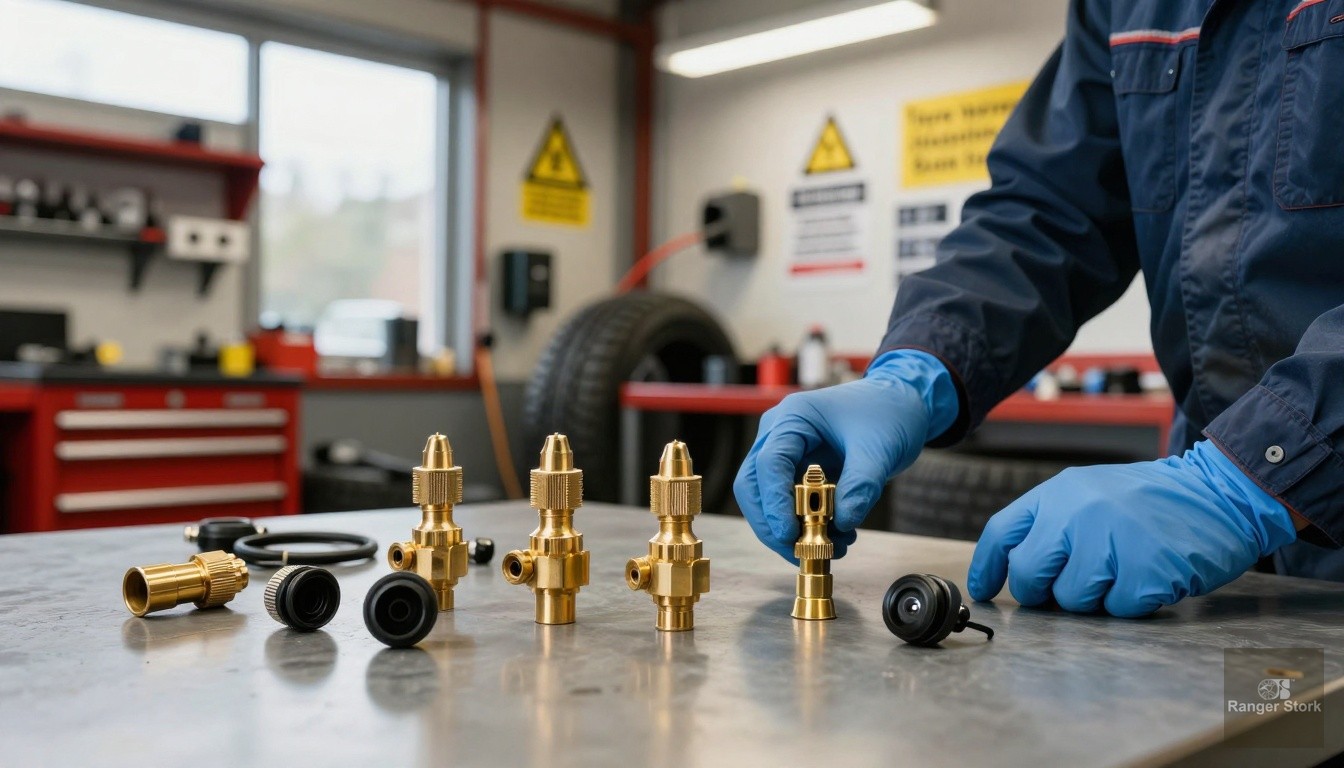
In the grand tapestry of automotive engineering, where high-output electric drivetrains and complex autonomous systems often seize the spotlight, there exists a modest yet pivotal component that serves as the ultimate guardian of vehicle stability: the tyre valve. For the professional UK workshop navigating the landscape of 2026, the tyre valve is no longer a mere “consumable” to be overlooked. It is a precision-engineered interface between the atmosphere and the vehicle’s primary contact point with the road.
As we move further into a decade defined by heavier battery electric vehicles (BEVs) and more stringent safety inspections, the technical nuances of tyre valve caps, stems, and sensors have moved from the periphery to the centre of workshop excellence. This guide serves to bring order to the complexities of modern valve systems, ensuring every technician can master the balance between material science, regulatory compliance, and economic efficiency.
1. The Anatomy of the Schrader Valve: A Century of Engineering
Before dissecting specific workshop standards, one must appreciate the foundational engineering of the Schrader valve—the global standard for pneumatic tyres. While the exterior appears simple, the internal architecture is a marvel of mechanical seals.
The valve consists of three primary elements: the stem (the body), the core (the internal spring-loaded seal), and the cap (the secondary seal and protector). In 2026, the “Refined Workshop” understands that any failure in these three components leads to pressure loss, which in turn increases rolling resistance, reduces the range of EVs, and compromises braking distances.
2. The Engineering Fundamentals of Snap-In Valves: TR412, TR413, and TR414
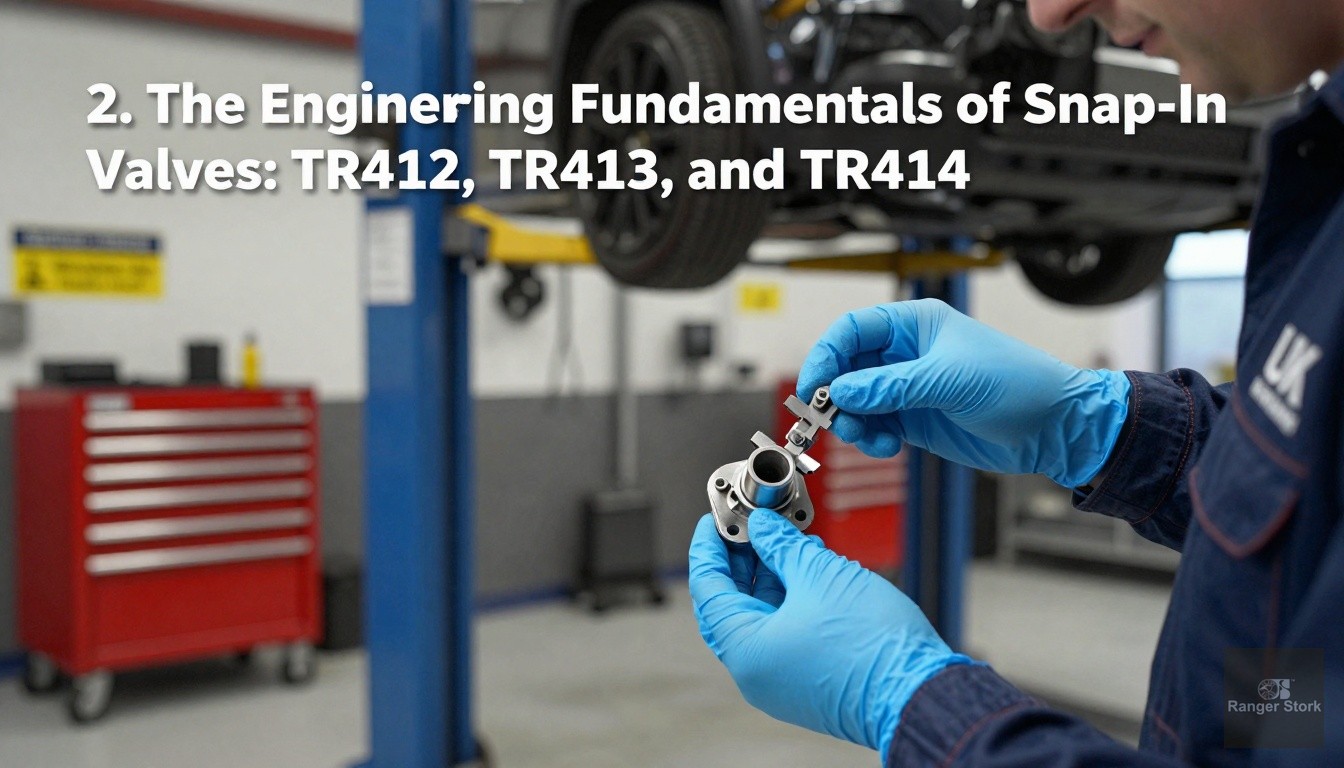
The foundation of tyre inflation for the vast majority of UK passenger vehicles remains the rubber snap-in valve. However, the term “standard” is a misnomer that masks a critical variety of specifications. In 2026, the designations TR412, TR413, and TR414 represent the primary toolkit for any professional tyre fitter. These designations refer specifically to the length of the valve stem, and choosing the correct one is vital for both safety and accessibility.
Understanding the TR Designations
- The TR412 (22mm): This is the shortest in the family. It is primarily utilised where space is at a premium, such as on small-diameter wheels or specialized alloy wheels where a longer valve might strike a brake caliper or be susceptible to damage from off-road debris.
- The TR413 (30mm): Often referred to as the “standard” valve, it is found on the majority of UK passenger cars. It provides a balanced length that allows for easy inflation without protruding excessively beyond the rim’s profile.
- The TR414 (38mm): The longest of the common snap-in valves, designed specifically for wheels with deep-set holes or those fitted with thick plastic wheel trims that would otherwise obstruct access to a shorter valve.
The Physics of Centrifugal Force and Dynamic Flex
Why does this minute difference in millimetres matter? The answer lies in the physical reality of centrifugal force. At a speed of 60 mph, a standard tyre valve experiences forces equivalent to several kilograms of weight pulling at the stem. By 100 mph, this force increases exponentially.
Using a valve that is too long for the specific wheel design can cause it to flex excessively at high speeds, leading to premature rubber fatigue and catastrophic air loss. Conversely, a valve that is too short may be impossible for the customer to reach with a standard petrol station air inflator, leading to neglected tyre pressures. The UK’s “TyreSafe” organization underscores this by recommending that valves be replaced every time a tyre is changed. The rubber “memory” of a snap-in valve degrades over time; a valve that held air for five years may fail once disturbed and reseated during a new tyre fitment.
3. Material Integrity: EPDM vs. Natural Rubber
The material science of 2026 has shifted the gold standard toward EPDM (Ethylene Propylene Diene Monomer). Unlike traditional natural rubber compounds, EPDM offers unparalleled resistance to:
* Heat Aging: Capable of withstanding temperatures up to 150°C, essential for vehicles equipped with high-performance braking systems that radiate significant heat into the wheel rim.
* Ozone Degradation: Modern urban environments are high in ozone, which causes “dry rot” or cracking in natural rubber.
* Chemical Exposure: Resistance to the acidic wheel cleaners and road salts prevalent on UK motorways.
For a workshop, procurement of EPDM-specified valves is a hallmark of quality. It ensures that the “50p part” does not become the reason a customer returns with a slow puncture six months later.
4. The Perils of Galvanic Corrosion: Plastic vs. Metal Caps
When selecting valve caps, the choice between plastic and metal is frequently viewed through the lens of aesthetics. However, for the professional UK workshop, this choice is governed by the harsh realities of chemical science—specifically, galvanic corrosion.
The Chemistry of Seizure
Galvanic corrosion is a significant concern for UK workshops because the frequent use of road salt during winter creates a highly conductive electrolytic environment. When a metal cap, often made of aluminium or a cheap alloy, is threaded onto a brass valve stem, a galvanic cell is created. The two dissimilar metals, in the presence of salt water, undergo a chemical reaction that effectively “welds” the cap to the stem.
For standard rubber valves, this is a nuisance that requires a relatively inexpensive valve replacement. However, for vehicles with integrated Tyre Pressure Monitoring Systems (TPMS), the valve stem is often part of an expensive electronic unit. If the cap seizes, the technician often has to break the valve to remove it, necessitating a full sensor replacement which can cost between £60 and £150.
The 2026 Solution: TPMS-Compatible Components
To mitigate this risk, professional workshops in 2026 now almost exclusively recommend:
1. High-grade plastic caps: These are non-reactive and will never seize, regardless of salt exposure. They often feature an internal O-ring seal to act as a secondary air barrier.
2. Engineered “TPMS-compatible” metal caps: These specialized caps feature plastic internal sleeves or are treated with non-reactive coatings to prevent metal-on-metal contact.
5. High-Performance Stability: Brass Clamp-In Valves
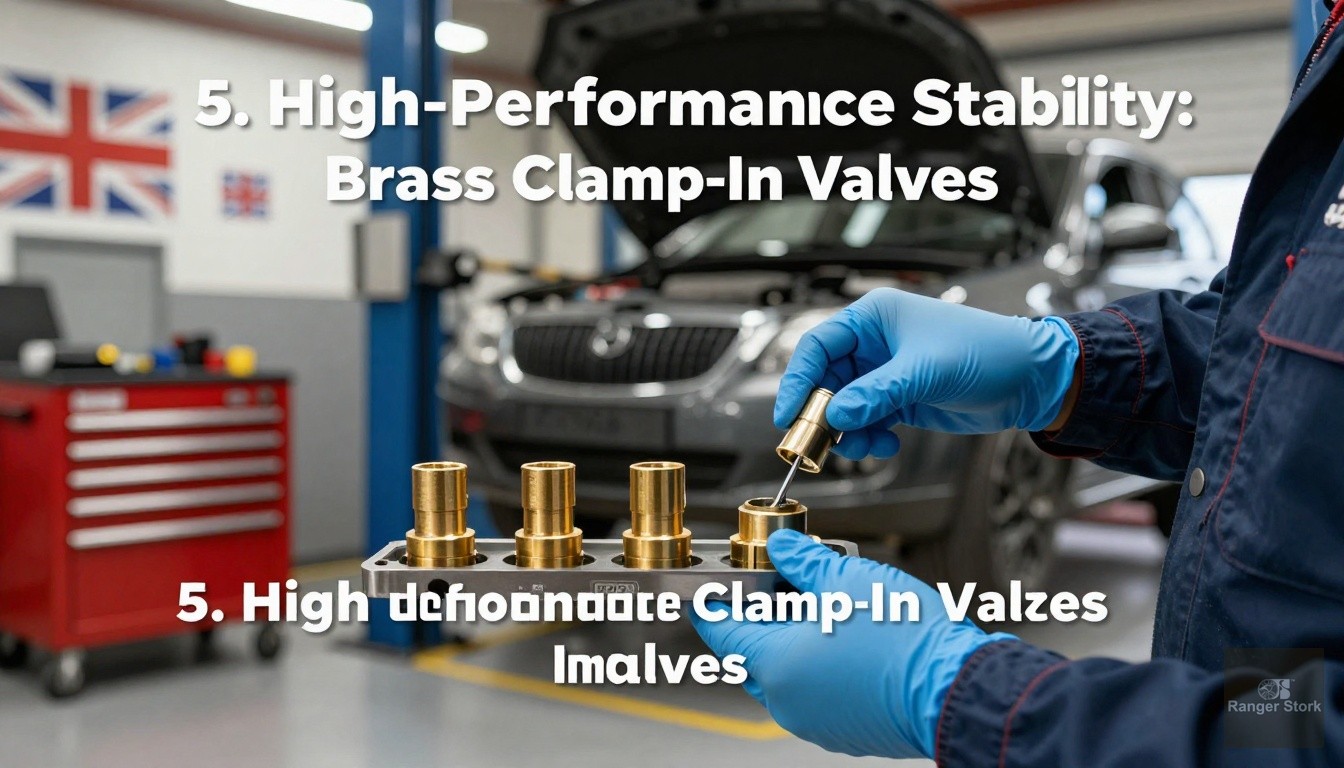
While snap-in valves are suitable for everyday commuting, certain applications demand a more robust solution. This is where the brass clamp-in valve becomes indispensable. These valves are the preferred choice for high-performance and heavy-duty applications, providing a level of mechanical security that a rubber-seated valve cannot match.
When to Recommend Clamp-In Valves
A standard rubber snap-in valve is typically rated for pressures up to approximately 65 PSI. However, clamp-in valves can handle much higher pressures, making them essential for:
* Motorhomes and Campervans: Where tyre pressures often exceed the limits of rubber stems.
* Heavy Commercial Vans: Which carry variable loads and require higher stability.
* Track Day and High-Speed Luxury Vehicles: At speeds exceeding 130 mph, centrifugal force can cause a rubber snap-in valve to bend up to 25 degrees. This bending can lead to air seepage at the base of the valve.
A metal clamp-in valve is physically bolted to the rim with a nut and a rubber grommet, providing a rigid and airtight seal that does not flex regardless of speed or pressure.
6. The TPMS Revolution: Protecting Electronic Integrity
The integration of TPMS has transformed the tyre valve from a simple mechanical conduit into a sophisticated electronic component. By 2026, the majority of the UK car parc is equipped with these systems, and their maintenance is a core competency for any modern workshop.
The Critical Detail: Nickel-Plated vs. Brass Cores
One of the most critical, yet often overlooked, details in TPMS maintenance is the choice of the valve core material.
* The Conflict: Standard valve cores are made of brass. However, many TPMS sensor stems are made of aluminium.
* The Consequence: If a brass core is inserted into an aluminium TPMS stem, galvanic corrosion occurs internally. The core becomes “frozen” inside the sensor. When a technician tries to check the pressure or replace the core, the stem can snap.
* The 2026 Standard: Workshop standards dictate the use of nickel-plated valve cores for all aluminium TPMS sensors. Nickel is more “noble” and less reactive with aluminium, ensuring that the core can be easily removed for years to come.
7. Professional Fitting Protocols and Torque Specifications
The era of “hand-tightening and hoping” is over. In 2026, precision is the mandate. Professional workshops must adhere to specific installation protocols to ensure the longevity of the valve assembly.
The Correct Use of Tools
- Valve Pullers: For snap-in valves, the use of a lubricated valve puller ensures the bulb of the valve seats correctly without tearing the rubber skin.
- Torque-Limited Drivers: For TPMS sensors and clamp-in valves, torque is critical. Most TPMS nuts require a specific torque (usually between 4Nm and 8Nm). Over-tightening can crush the rubber grommet or crack the sensor housing, while under-tightening leads to slow leaks.
- Core Tools: Valve cores should be tightened to approximately 0.4Nm. Professional workshops now use preset torque core drivers to eliminate human error.
8. Navigating the 2026 UK MOT Landscape
The MOT inspection remains the ultimate arbiter of vehicle safety in the UK, and as of 2026, the requirements regarding tyre valves and TPMS are more stringent than ever.
MOT Failure Points for Valves
During an MOT inspection, the examiner will look for:
1. Perished or Damaged Stems: If a valve shows deep cracks in the rubber or is visibly leaking, it is classified as a “Major” defect, resulting in an immediate fail.
2. TPMS Functionality: For vehicles first used on or after 1 January 2012, the TPMS system must be fully functional. If the TPMS warning light is illuminated due to a faulty valve sensor, a dead battery within the unit, or a missing sensor, the vehicle will fail.
3. Valve Seating and Caps: The inspector checks that the valve is correctly seated. While the absence of a cap is usually recorded as an advisory, it is noted as a failure to protect the valve core from contamination, which can lead to future leaks.
Data Insight: According to DVSA trends leading into 2026, “tyre condition” (which includes valves) accounts for approximately 10-12% of all initial MOT failures. Workshops that perform a “pre-MOT valve check” can significantly reduce failure rates for their customers.
9. The B2B Economic Ecosystem: Pricing and Professionalism
The tyre valve market operates within a B2B pricing structure that reflects the diversity and complexity of the components involved. In 2026, workshops can expect pricing tiers ranging from £5 to £50 depending on the volume and technical specification.
Understanding the Pricing Tiers
- Entry Tier (£5 – £10): Typically involves bulk-buy quantities of basic TR413 rubber valves or high-volume packs of plastic caps. These are the “bread and butter” consumables for high-volume tyre centres.
- Mid Tier (£15 – £30): Premium EPDM rubber valves with high-pressure cores or specialized brass clamp-in valves for commercial use. This tier also includes “Service Kits” for popular TPMS sensors.
- Premium Tier (£40 – £50+): Comprehensive TPMS “Service Kits” for luxury vehicles or high-end aftermarket metal valve sets with custom finishes. These kits include the sensor-to-rim seals, specialized nickel-plated cores, and torque-sensitive nuts.
Value-Added Servicing: The Workshop ROI
Analysis of UK automotive wholesale markets shows that while a standard TPMS Service Kit might cost a workshop between £3 and £8 per wheel, charging a consumer a “TPMS Maintenance Fee” of £15-£20 is a justifiable and necessary practice. This fee covers the labour of careful dismantling, the use of specialized diagnostic tools, and the guarantee of using non-reactive parts.
10. Troubleshooting Common Valve Failures
Even with the best components, failures can occur. The refined workshop must be adept at diagnosing the root cause of pressure loss.
| Symptom | Potential Cause | Professional Solution |
|---|---|---|
| Slow leak from the base | Improper seating or torn bulb | Replace valve; check rim for corrosion/burrs |
| Leak from the top (with cap off) | Faulty or contaminated core | Replace with nickel-plated core; check for debris |
| Seized valve cap | Galvanic corrosion | Use specialized removal tool; replace entire valve/sensor |
| TPMS light on (intermittent) | Weak sensor battery or core leak | Test with TPMS diagnostic tool; replace service kit |
| Cracking on rubber stem | Ozone damage / Non-EPDM rubber | Mandatory replacement with EPDM-rated valve |
11. Expert Perspectives: The Cost of Neglect
As Mark Henderson, a senior consultant in automotive quality standards, notes: “A tyre valve is a 50p part protecting a £200 tyre and a £500 wheel. In our 2026 audits of UK workshops, we found that 15% of ‘slow puncture’ complaints were actually caused by reused valve cores or incorrectly torqued clamp-in valves.”
This insight highlights the necessity of using comprehensive TPMS “Service Kits.” The move toward professional-grade B2B valve kits is not just about profit; it is about eliminating the most common point of failure in the wheel assembly.
12. Sustainability and Environmental Responsibility
In 2026, the automotive industry is under increasing pressure to adopt sustainable practices. Tyre valves, while small, contribute to the waste stream. Professional workshops are now adopting:
* Rubber Recycling Programs: Ensuring that old EPDM and natural rubber valves are processed alongside scrap tyres.
* Metal Recovery: Collecting brass stems and aluminium TPMS components for metal recycling.
* Longevity through Quality: By using EPDM valves that last longer, workshops reduce the frequency of replacements, contributing to a lower overall environmental footprint.
13. Future Trends: The Evolution of Intelligent Valves
Looking beyond 2026, the tyre valve is set to become even more integrated. We are seeing the emergence of “Smart Valves” that can communicate directly with a smartphone or the vehicle’s cloud-based maintenance log. These systems will monitor not just pressure, but also the temperature of the air inside the tyre and the vibration levels, providing early warnings of bearing failure or wheel imbalance. For the UK workshop, staying ahead of these technological shifts is essential for maintaining a competitive edge.
Conclusion: Bringing Harmony to the Wheel Assembly
In the world of automotive maintenance, the tyre valve is a testament to the idea that the smallest details often carry the greatest weight. From the aerodynamic stresses on a TR414 stem at high speeds to the electrochemical battle against galvanic corrosion on a salted UK motorway, the valve is a component that demands technical respect.
By embracing the standards of 2026—utilising EPDM materials, ensuring TPMS compatibility with nickel-plated cores, and adhering to the strictures of the MOT—UK workshops can ensure they are providing the highest level of safety. The transition from simple plastic caps to engineered solutions is not merely a trend; it is a necessary evolution in the pursuit of automotive excellence.
Actionable Takeaways for Workshops:
* Audit Your Stock: Ensure all snap-in valves are EPDM-rated and all cores for TPMS are nickel-plated.
* Standardize Replacement: Follow the TyreSafe mandate—new tyre, new valve, every time.
* Invest in Precision: Equip technicians with torque-limited drivers for both cores and TPMS nuts.
* Educate the Customer: Explain the “welding” effect of cheap metal caps to upsell TPMS-safe alternatives and service kits.
* Pre-MOT Checks: Always inspect valve stems for perishing as part of a pre-MOT or health check to prevent avoidable failures.
By maintaining this balance of logic and technical precision, the modern workshop ensures that every journey begins and ends on a foundation of pressure-perfect security.