
Blog
Wheel Alignment Tools: Complete Guide for UK Workshops 2026
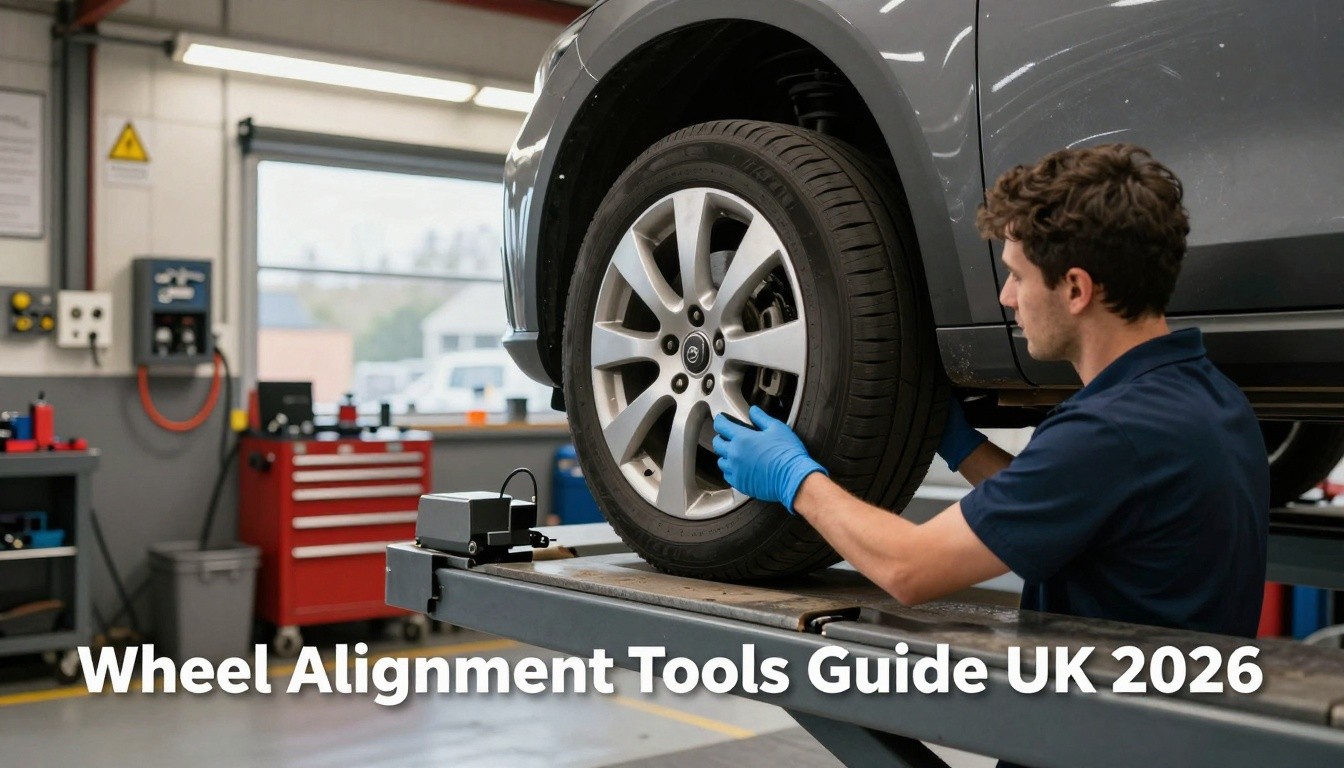
This guide shows you how to choose the best wheel alignment tools for your UK workshop in 2026. You will learn about the different types of equipment, what they cost, and how they help you make more money.
Why Wheel Alignment is a Great Way to Make Money in 2026
The car market in the UK is changing. Most workshops used to make money from oil changes and engine repairs. Now, more people drive Electric Vehicles (EVs). These cars do not need oil changes. This means workshops need new ways to earn a profit. Wheel alignment is one of the best ways to do this.
Why Electric Vehicles Need More Alignment Work
EVs are very heavy. They have large batteries that weigh a lot. This extra weight puts a lot of pressure on the car’s suspension. Because the cars are heavy, parts like bushings and ball joints wear out faster.
UK roads have many potholes. When a heavy EV hits a pothole, the wheels are more likely to move out of place. This means EV owners need to have their wheels checked more often. If you can fix these cars, you can charge a good price for your work. You will also help your customers save money on tyres.
What is Total Vehicle Geometry?
In the past, mechanics only talked about “tracking.” This usually meant just checking the front wheels. Today, cars are more complex. Many small cars now use multi-link suspension. This used to be only for luxury cars.
Now, you must look at “Total Vehicle Geometry.” This means checking all four wheels. If the back wheels are not straight, the car will not drive in a straight line. This is called “dog-tracking.” It makes the tyres wear out very fast and makes the car harder to steer. A good workshop checks all four wheels every time.
Laser Alignment and Tracking Tools (£200 – £1,500)
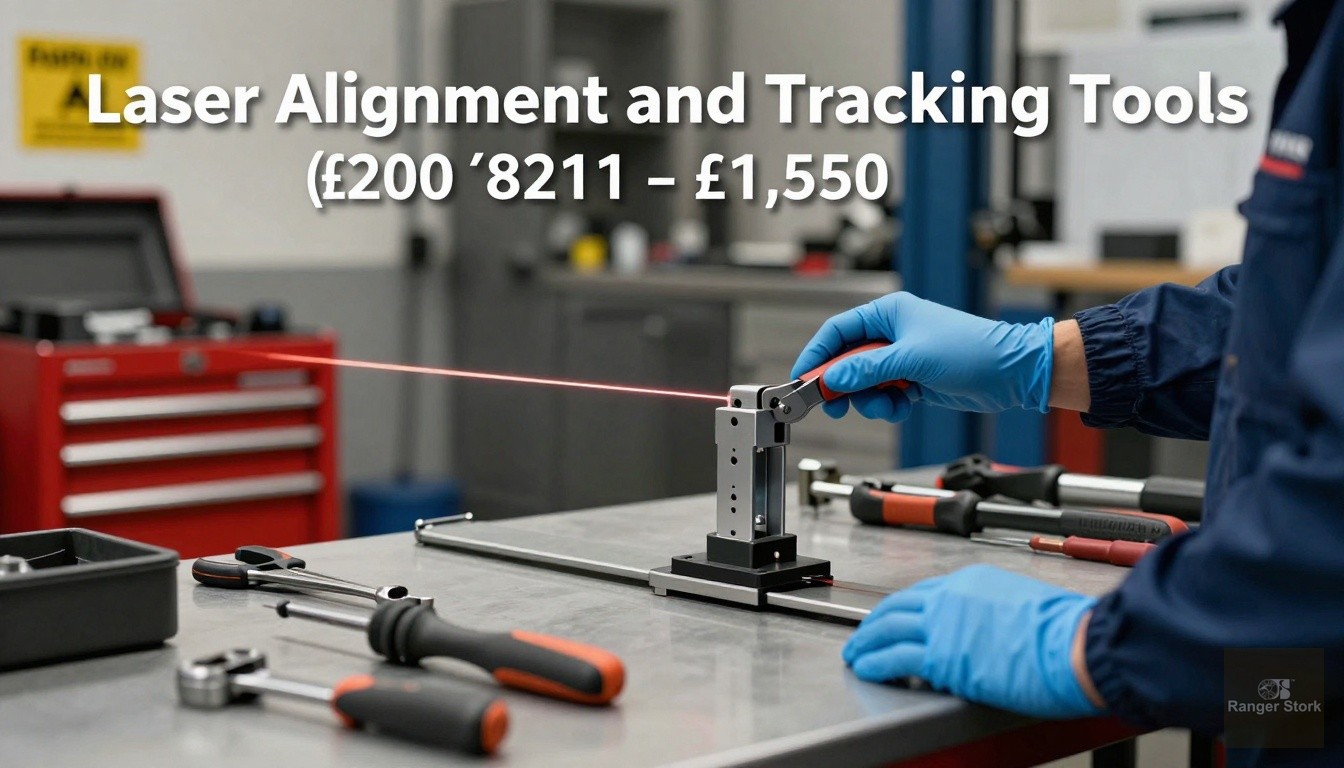
Laser tools are the cheapest way to start doing wheel alignment. They cost between £200 and £1,500. Many mobile mechanics and small garages in the UK use these tools.
How Laser Tools Work
Laser systems are simple. You hang a laser unit on the front wheels. You put scales on the back wheels. The laser shoots a beam of light at the scales. The light shows you if the wheels are straight. These tools are small and easy to carry. They do not need a computer or a battery charger. Most people use them for “toe” adjustments on the front wheels.
The Problems with Laser Tools
Laser tools have some limits in 2026. They are mostly for basic jobs. They do not always measure the “thrust angle.” This is the direction the back wheels are pointing. If the back wheels are crooked, the steering wheel will stay tilted even if the front wheels are straight.
Laser tools also require more manual work. The mechanic must read the scales and write the numbers down. This can lead to mistakes. Also, laser tools do not give you a printed report. Most customers today want to see a printout that proves the work was done. Laser tools are accurate to about +/- 0.5mm. This is fine for old cars, but it is not precise enough for new cars with sensors.
CCD Computer Alignment Systems (£2,000 – £6,000)
CCD stands for “Charge-Coupled Device.” These are electronic systems that use wireless data. They cost between £2,000 and £6,000. For most independent UK garages, these systems are the best choice.
How the Technology Works
CCD systems use a computer. The computer has a list of every car sold in the UK. This includes new EVs and hybrids. The system has four sensors that you put on the wheels. These sensors talk to each other using Bluetooth or Wi-Fi. They tell the computer exactly where the wheels are pointing.
Why Small Shops Like CCD Systems
One big plus is the “Before and After” report. You can print a page that shows the customer what was wrong. The report uses red marks for bad alignment and green marks for good alignment. When customers see the green marks, they feel happy to pay for the service.
CCD systems are also good if you do not have much space. You do not need a big camera tower in front of the car. These sensors work on many types of car lifts. They even work on floors that are not perfectly flat. You can usually charge between £60 and £120 for a full job using this equipment.
3D Imaging Alignment Systems (£7,000 – £15,000+)
3D systems are the most advanced tools you can buy. They cost from £7,000 to over £15,000. These systems use high-quality cameras and plastic “targets” that you clip onto the wheels.
Speed and Ease of Use
The best thing about 3D systems is speed. A mechanic can check a car in less than 90 seconds. You do not have to move the car very much. There are no electronics on the wheels. This is good because there are no batteries to charge. It also means if a target falls off the wheel, it will not break like an expensive electronic sensor might.
Best for Busy Tyre Centres
Busy shops that change a lot of tyres love 3D systems. You can check every car that comes in for a “free audit.” If the machine shows the alignment is out, you can show the customer right away. 3D systems are very accurate. They measure down to +/- 0.01 degrees. They also check themselves to stay accurate. You do need a special flat bay and a level car lift to use these systems correctly.
Camber, Caster, and Special Tools
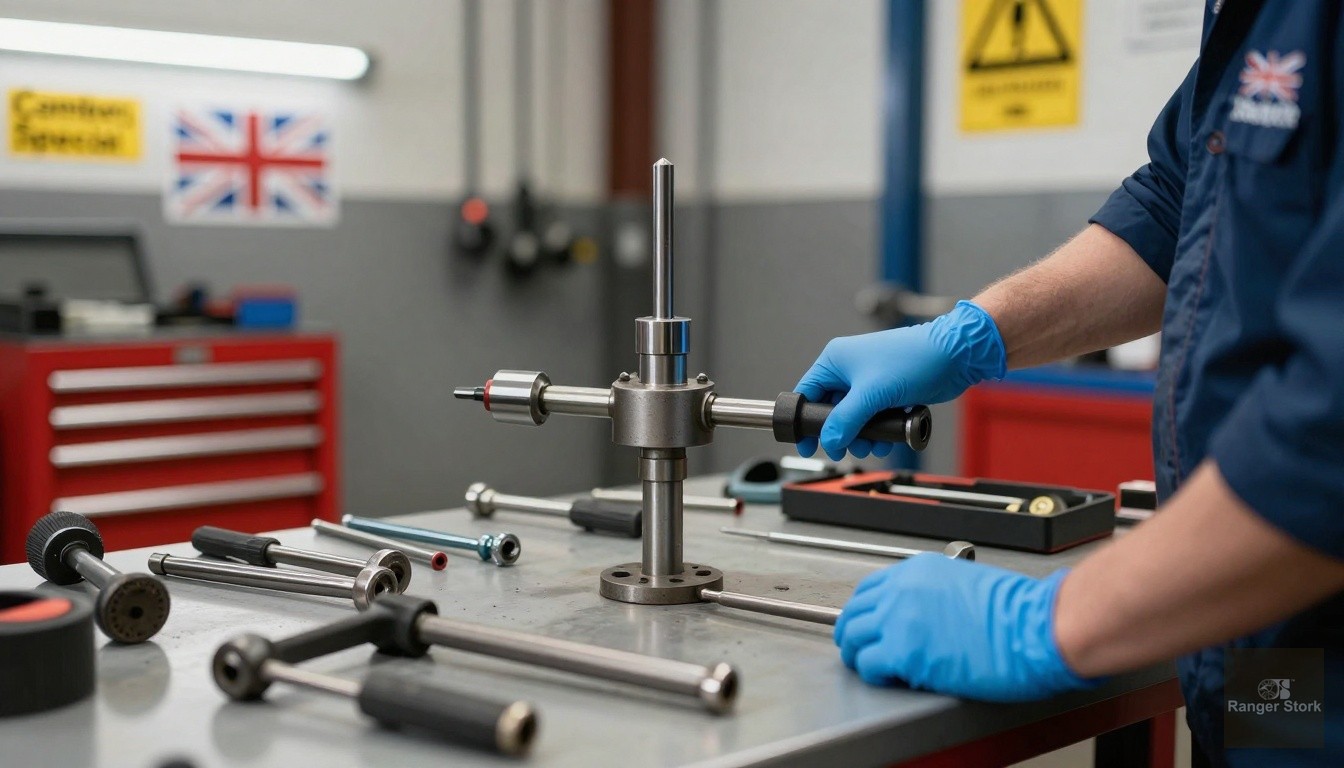
Adjusting the “toe” is only one part of the job. You also need to check Camber and Caster.
- Camber: This is if the top of the tyre tilts in or out.
- Caster: This is the angle of the steering pivot.
These angles are very important for how the car turns. They also stop the tyres from wearing out on just one side.
Fixing Cars in the UK
UK roads use a lot of salt in the winter. This salt makes bolts rust and get stuck. You will need strong tools and sometimes a torch to heat up the bolts. Some cars, like Fords and VWs, use “shims.” These are small metal plates you use to change the wheel angle.
Digital camber gauges are better than the old bubble gauges. They are very important for cars that have been lowered or modified. Michelin says that if a car is just 0.5 degrees out of alignment, the tyres wear out 30% faster. On an EV, new tyres can cost £1,000. If you save the customer £300 by fixing their alignment, they will come back to your shop.
ADAS: Why Alignment is Now a Safety Job
ADAS stands for Advanced Driver Assistance Systems. These are the cameras and radars that help a car stay in its lane or brake automatically.
The Safety Link
There is a direct link between alignment and ADAS. If the wheels are not straight, the car’s “thrust line” is wrong. This means the car is actually driving at a slight angle. The ADAS camera then looks at the wrong part of the road. The car might think it is crossing a line when it is not. This can make the car steer itself the wrong way.
Legal Risks for Your Shop
In the UK, Thatcham Research says wheel alignment is the base for all ADAS work. If you change the steering or the suspension, you must check the ADAS. Sometimes you must do a full ADAS reset. If you align a car with these sensors but do not check them, you could be in trouble if the car has an accident. By 2026, 8 out of 10 new cars in the UK have these systems. You must have the right tools to handle them safely.
UK MOT Standards and Rules
The DVSA runs the MOT test. Bad “tracking” does not always make a car fail the MOT. But it is linked to things that do cause a fail.
Using the MOT to Find Work
Section 2 of the MOT manual is about steering. Section 5 is about tyres. If a tyre has “uneven wear,” the car can fail. This wear is almost always caused by bad alignment. If you see a tyre with a “sawtooth” pattern, you know the alignment is wrong.
Smart workshops use the alignment tool during the MOT. Even if it is not a fail, you can tell the customer it is an “advisory.” You can show them the digital report. This helps you turn a basic MOT into a bigger job that pays more.
Future Rules
New rules like “Euro 7” will look at tyre dust. When wheels are not aligned, they rub against the road and create dust. This dust is a type of pollution. In the future, the government might make wheel alignment a required service to protect the environment.
How to Price Your Services and Make a Profit
When you buy a tool, do not just look at the price tag. A £500 laser tool is cheap to buy, but it takes a long time to use. A £12,000 3D tool is expensive to buy, but it is very fast.
Paying Back the Tool
Think about how long it takes to pay for the machine. If you buy a 3D system for £10,000, you might pay £200 a month on a lease. If you charge £80 for an alignment, you only need to do three jobs a month to pay the lease. Most busy garages do 5 to 10 jobs a week. This means the machine makes a lot of profit very quickly.
Other Costs to Plan For
You should also think about these costs:
* Data Updates: Some companies charge £500 a year to give you the specs for new cars.
* Calibration: You must have your sensors checked once or twice a year to keep them accurate.
* The Floor: A 3D system needs a very level floor. You might need to buy a new car lift, which can cost £5,000.
Marketing is also key. Offer “Free Alignment Checks.” It only takes two minutes on a 3D machine. If the car is out of alignment, you can sell the repair and maybe new tyres too.
Conclusion: Why Precision Matters
The days of basic “tracking” are over. In 2026, a UK workshop needs a real 4-wheel alignment system to stay in business. If you do not have one, you will lose work from EVs and cars with ADAS sensors.
The right tool depends on your shop:
* Laser tools are good for small mobile jobs.
* CCD systems are the best all-around choice for most garages.
* 3D systems are the best for shops that do a lot of tyres.
Good alignment saves your customers money on fuel and tyres. It also keeps their safety systems working right. If you focus on doing the job right, your alignment bay will be the most profitable part of your workshop. Choose the equipment that fits your customers, and your business will grow.